
Protecting family property is part of the ethics of the caregiver profession.
Caregiver old person, patients At home, they are not just caring for people. They are also entering the private space of a family, a place containing property, personal belongings, documents, medicine, valuables, and many other private items.
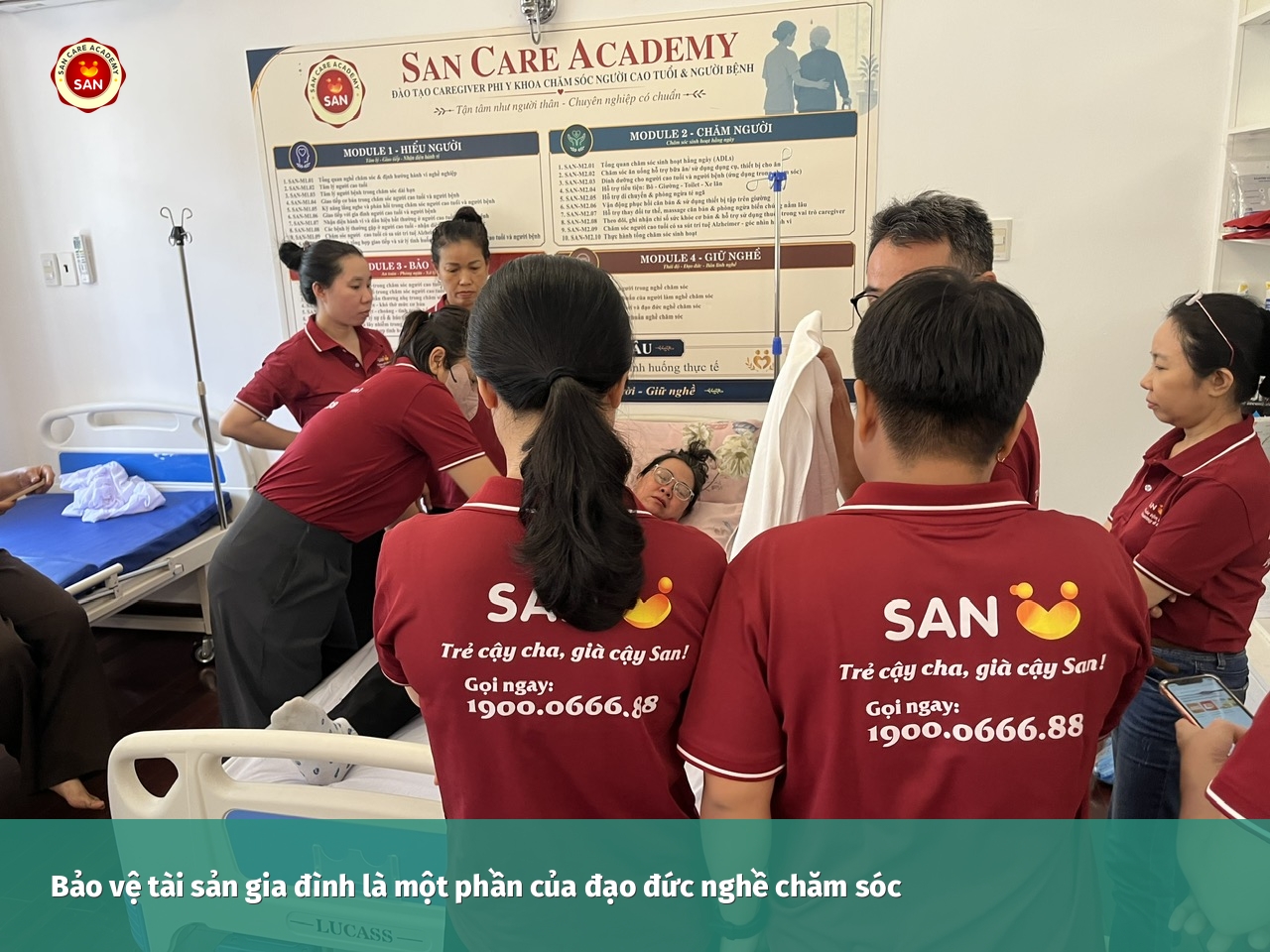
So, protecting family assets is an important part of professional ethics in caregiving.
A caregiver may be competent, knowing how to feed, clean, change clothes, assist with mobility, and report well. However, if they are unclear about property, use items without permission, move things without reporting, damage things without explaining, or engage in dishonest behavior, it will be very difficult for the family to continue trusting them.
In home care professionTrust is the foundation. And protecting assets is one way to maintain that trust.
Why is family property related to professional ethics?
Caregivers work in the client's home, not in a public space. They may come into contact with bedrooms, lockers, telephones, wallets, jewelry, papers, medications, mementos, or items of sentimental value.
Families entrust that space to their caregivers because they trust them. If caregivers don't respect property and personal boundaries, that trust is damaged.
Protecting assets It's not just about "not taking things." It also includes not opening cabinets without permission, not using items without asking, not moving things arbitrarily, not leaving damaged items unreported, not losing things, and not concealing incidents.
Professional ethics lie in clarity in such small matters.
Do not use family belongings without permission.
Caregivers should not use food, drinks, phones, personal items, cosmetics, clothing, medicine, electronic devices, or any other family property without permission.
If you need to use an item to care for the elderly or the sick, you should ask for clarification:
- "Excuse me, can I use this cloth to wipe Grandma's face?"
- "Excuse me, sir/madam, where are your toiletries so I can use them correctly?"
- "Yes, how should I remind my family about this medication?"
Asking beforehand is a clear and professional way of doing things.
Don't think "it'll be fine" and use it without permission. In a family environment, acting without permission can easily lead to misunderstandings.
Do not move property without permission.
During caregiving, caregivers sometimes need to clear the area around the bed, arrange pathways, put away hazardous materials, or move items to make caregiving more convenient.
However, for personal belongings or valuables, caregivers should notify or ask for permission before moving them.
For example:
- "I think the walkway is a bit obstructed, so I'd like to move this chair aside to make it safer for you, sir/madam."
- "I noticed your phone is near the edge of the bed and could easily fall, so I'd like to ask permission to place it on the table next to it."
- "I find it a bit easy to mix up the medications here. Could your family please tell me where the correct place to put them?"
Moving belongings with prior notice gives the family peace of mind and avoids misunderstandings when items can't be found.
Report any damage or loss immediately.
During the caregiving process, situations might arise where you drop a glass, spill water, damage items, lose a bottle cap, stain the sheets, or break something else.
It is important to report it immediately.
Don't hide it, don't make temporary fixes without saying anything, and don't blame others. elderly or sick people.
It can be said that:
- "Yes, I accidentally dropped this glass while clearing the table. I'd like to inform your family."
- "Yes, I spilled water on the bedsheet. I've changed it and would like to inform the family."
Minor incidents, if reported truthfully, are usually easy to handle. But if they are concealed, they become a matter of trust.
Do not accept money or property for safekeeping unless clearly stipulated.
Caregivers should limit their handling of money, jewelry, documents, or important property unless there are clear instructions from the family or the managing institution.
If the family asks you to use the money to buy things, you need to clearly record the amount received, the items purchased, the change, and report it transparently.
Do not keep leftover money without permission. Do not buy things without consent. Do not accept valuable possessions without clear confirmation.
Transparency in finances is a way to protect both the family and the caregiver.
Be careful with medications and paperwork.
Medications, medical records, and personal documents are important items. Caregivers should not arrange, discard, move, or use them without instruction.
If family members assign the task of reminding you to take your medication as directed, you must follow the instructions precisely and not change the medication, dosage, or time without permission.
If you notice any dropped pills, mixed-up pills, unclear labels, or anything else that seems suspicious, you should inform your family.
Regarding personal documents, files, or records, do not read, photograph, send, or share them without permission.
Respecting paperwork and medications is also respecting family privacy.
Protecting assets of sentimental value.
Not all possessions are worth money. There are ordinary items that hold sentimental value for the elderly: a photograph, a scarf, a notebook, an old item, a radio, a small potted plant.
Caregivers should not dispose of, move, or treat these items lightly without permission.
If cleaning is needed, you should ask:
- "Where would you like to keep this item, sir/madam?"
- "Could your family please tell me which items I should keep and which I can get rid of?"
Respecting property also means respecting the memories and feelings of the elderly.
Assets and professional beliefs
In caregivingJust one instance of family suspicion regarding assets can severely damage trust.
Therefore, caregivers need to be proactive and clear. They must ask permission before using anything. They must report when moving anything. They must report when anything is broken. Finances must be transparent. Personal space must be respected.
Clarity helps caregivers avoid misunderstandings and build personal credibility.
A family may remember for a long time a caregiver who was honest, careful, and attentive.
How does SAN Care Academy train property protection personnel?
In SAN Care Academy, protecting family assets It is considered part of the professional ethics of caregivers.
Trainees were emphasized that caregivers work in the private space of a family home and therefore need to be honest, discreet, careful, and transparent.
Trainees are instructed not to use or move property without permission, to report any damage or loss, to keep family information confidential, and to respect the sentimental value of elderly people's belongings.
SAN Care Academy vocational training in caregiving Not only through skills, but also through professional integrity.
Frequently Asked Questions
Are caregivers allowed to use items in the client's home?
It should only be used with family permission or when it is a tool specifically instructed for caring for the sick or elderly.
What should you do if you accidentally damage something?
Report the incident immediately, explain the situation clearly, and don't hide anything. Honesty helps maintain trust.
Should you arbitrarily remove or discard the belongings of elderly people?
No, you shouldn't. You should ask the elderly or family first, as many items have sentimental value.
What should you do when you receive money to buy things?
It is necessary to be transparent about the amount of money received, the items purchased, the change, and to report it clearly.
Is protecting property a professional ethical obligation?
Yes. The caregiver works in the family's private space, so protect assets It is an important part of professional ethics.
Register for a consultation on courses in caring for the elderly and the sick.
If you want to learn a trade caring for the elderly, patients in a way that is skilled, honest, and professional ethics, SAN Care Academy We can advise you on a suitable course.
You can register to receive a consultation:
- Suitable courses in elderly and sick care.
- Training content on professional ethics for caregivers.
- Skills for protecting assets and keeping family secrets.
- Life skills and safety
- Latest tuition fees and class schedules
- Supervised internship conditions
- Career guidance after the course
Sign up for a consultation today to learn how to provide proper, honest, and professional caregiving.
Do you want a long-term career in caregiving that earns your family's trust?
Let SAN Care Academy advise you. course This will help you develop skills, professional ethics, and clarity in the home care environment.


