
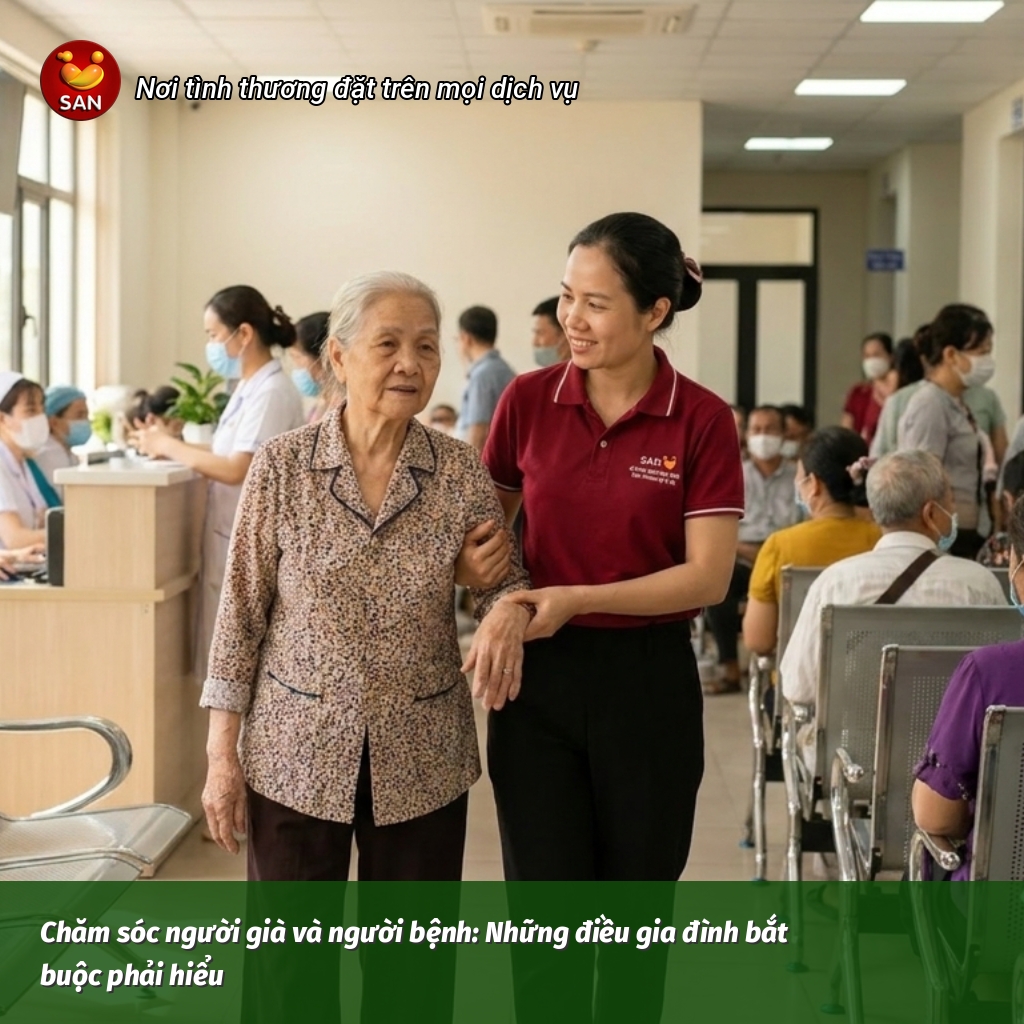
Caring for the elderly and the sick: Things families absolutely must understand.
In a rapidly aging society like Vietnam, the caring for the elderly and patients It's no longer just a private family matter, but is becoming a major social issue. Almost all of us, at some point, will have to face this. taking care of elderly parents, sick relatives, or even oneself in the future.
However, the đáng thing is that most of us still misunderstand what "care" means.
Many people think that simply having someone "by their side" to take care of their meals, clothes, personal hygiene, etc., is enough. But in reality, caring for the elderly and patients It is a much more complex process, requiring a combination of basic medical knowledge, observation skills, problem-solving abilities, and especially psychological understanding.
A small mistake in care can lead to big consequences. An overlooked abnormal sign can cause the illness to worsen. Incorrect care can slow recovery or even cause complications.
That's why more and more families are starting to realize that caregiving can't rely solely on anecdotal experience.
In reality, a common phenomenon currently exists – often referred to as “floral print nurse"This is a colloquial term referring to untrained caregivers, mostly acquaintances, relatives, or migrant workers from the countryside, who care for patients based on personal experience. They may be very dedicated, but lack the fundamental knowledge to handle basic medical situations."
In many cases, improper care not only fails to improve the patient's condition but can also worsen it. Examples include incorrect feeding techniques causing choking, failure to recognize early signs of stroke, or mishandling breathing difficulties. These issues don't stem from irresponsibility, but rather from a lack of proper training.
Meanwhile, the demand for care is increasing rapidly. Hospitals are constantly overloaded. Nursing homes and centers are also struggling. elderly care This is becoming increasingly common. Modern families are smaller, children work far away, and cannot be present to provide regular care. All these factors are creating significant pressure on the care system.
And what inevitably happened was: There is a shortage of qualified caregivers.
Not everyone can be a caregiver. It's not a job "anyone can do." On the contrary, it's a profession that demands patience, responsibility, skills, and professional ethics. In many developed countries, caregivers are formally trained, certified, have clear career paths, and offer stable incomes.
But in Vietnam, this profession is still not properly recognized. Many people still confuse "caregiving" and "caregiving."help"This leads to underestimating both the job and the people who do it."
The truth is, Caring for the elderly and the sick is one of the fastest-growing professions in demand over the next 10–20 years.This is not only due to an aging population, but also because societal perceptions are gradually changing. People are beginning to understand that proper care can improve quality of life, shorten recovery time, and even extend lifespan.
So, if someone wants to seriously pursue a career in caring for the elderly or the sick, what do they need?
The answer lies in training.
A true caregiver needs to be equipped with at least four elements: basic medical care knowledge, practical skills, communication and patient psychology understanding, and professional ethics. More importantly, they need practical experience in a controlled environment, such as a hospital or care center, to gain real-world experience.
That's also why professional caregiver training models have started to emerge. These programs not only teach theory but also combine it with practical training, and some even offer paid internships, allowing students to learn and work simultaneously, accumulating skills and earning an income.
After completing the training, learners can choose from many different career paths: working in hospitals, nursing homes, care centers, or as freelancers through home care platforms. This is an open market with high and largely untapped demand.
From a family perspective, the choice of caregiver also needs to change. Instead of relying solely on personal connections, priority should be given to those who have received training, have established management systems, and follow clear work procedures. This not only ensures the patient's safety but also provides greater peace of mind for the family throughout the caregiving process.
Currently, platforms like SAN are building a home care ecosystem where caregiver Not only are employees carefully selected, but they also receive thorough training before starting work. Simultaneously, SAN is developing a training academy to standardize the workforce for the industry, helping to address the shortage of qualified personnel. caregiver in the future.
If you're looking for a caregiver for a loved one, or considering pursuing a career in caregiving as a stable and meaningful path, now is the right time to start.
You can contact SAN directly for advice on in-home care services, or to learn about professional caregiver training programs.
Making the right choices today not only helps ensure your loved ones receive better care, but also contributes to building a sustainable care system for society in the future.
SAN care platform


