
Why are nursing homes opening in such large numbers but still facing staff shortages?
In recent years, if you pay attention, you'll notice a very clear trend: nursing homes and centers. elderly careThe boarding school model is becoming increasingly common, especially in large cities.
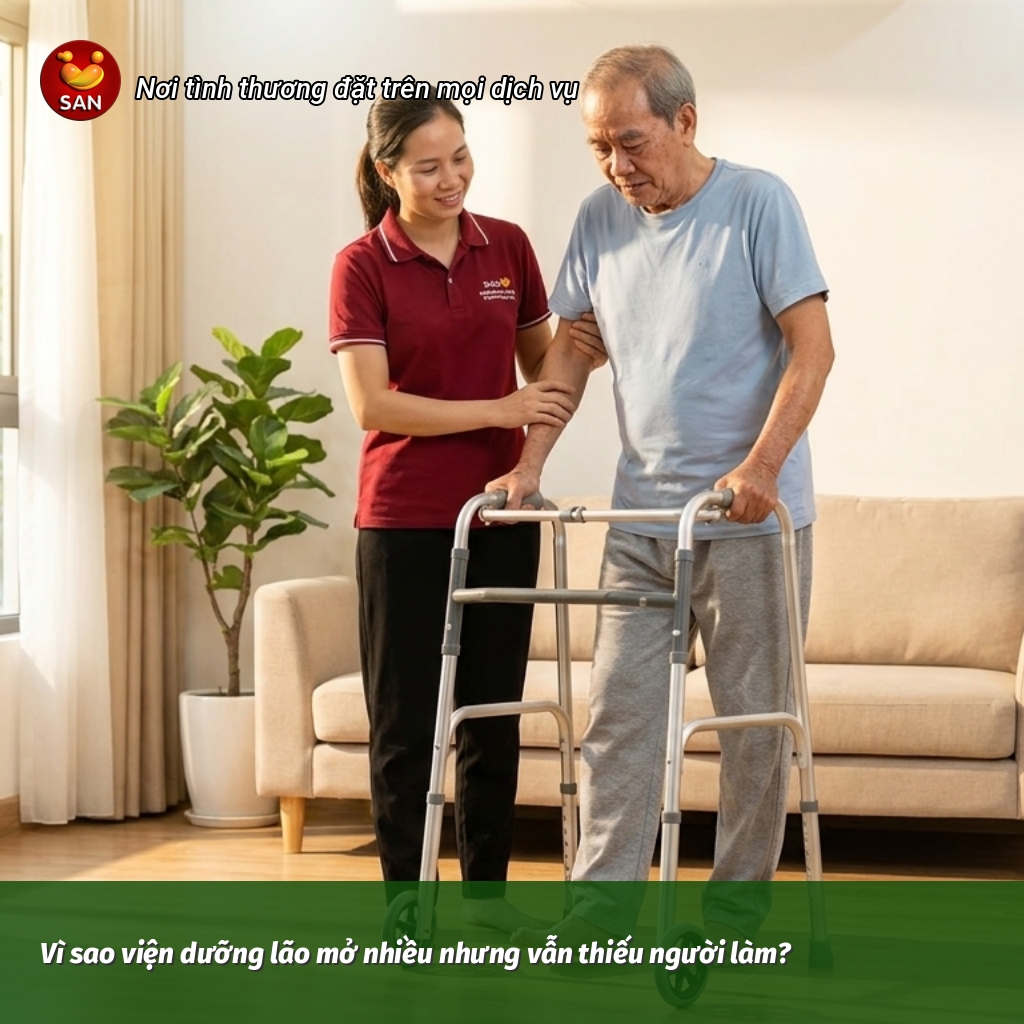
This reflects an irreversible reality: Vietnam's population is aging rapidly, and the need for professional care is increasing sharply.
But there's a paradox that few people notice.
Despite increasingly developed facilities and clear needs, most of these units face the same problem: a shortage of staff.
The problem isn't a general shortage of workers, but rather a shortage of people who are specifically qualified to work in caregiving.
Many people still think that caring for the elderly good patients These are just simple tasks like cooking, cleaning, and assisting with daily activities. But in reality, when you enter an environment like a nursing home or hospital, the requirements are completely different.
A person take care of They need to know how to monitor vital signs, provide proper mobility support, handle basic emergencies, and understand... psychology of the elderlyand coordinate with the medical team. This is no longer "household chores," but a professional occupation.
That's why many people who try it don't last. Not because they're not hardworking, but because they're not prepared.
Meanwhile, a large portion of the current workforce still comes from the "spontaneous" model – or what is more commonly known as "group caregivers." These are caregivers who rely on personal experience, often acquaintances, relatives, or migrant workers from rural areas.
They may be hardworking and genuinely want to help, but when placed in a professional care environment, their lack of skills and knowledge will become very apparent.
For example, in a nursing home, each patient has a different condition. Some are recovering from a stroke, some have chronic illnesses, and some suffer from dementia. Each case requires individualized care. If care is provided according to general habits, it will not only be ineffective but may also be harmful.
This is why many facilities, even though they recruit staff, struggle to retain them. And even when they do have staff, the quality of care is inconsistent.
Another issue that is rarely discussed is socio-psychological factors.
Elderly care profession and patients In Vietnam, this field is still not properly recognized for its value. Many people consider it a temporary job with low income and no future. This discourages potential talent from entering the industry, or if they do, they don't stay in it long-term.
Meanwhile, in developed countries, being a caregiver is a profession. They receive thorough training, have clear certifications, a clear career path, and a stable income. The difference lies not in the nature of the work itself, but in the training system and how society views the profession.
Returning to Vietnam, it's clear that the core problem isn't a shortage of people, but a shortage of people who are properly trained.
And this is precisely where the market is beginning to change.
More and more families are no longer willing to take risks by hiring unqualified caregivers, and are instead seeking out trained caregivers with established management systems and clear procedures. This creates reverse pressure on the market: those who lack training will gradually be eliminated.
In parallel with that, platforms such as SAN care platform SAN is taking a different approach: standardizing its workforce from the ground up. Instead of simply hiring and sending people to work, SAN focuses on pre-training, ensuring each individual... caregiver They all have the necessary foundational knowledge and skills before they can approach it. patients.
At the same time, developing training academies also helps create a stable supply for the market, not just for itself. SAN which the entire ecosystem takes care of.
Looking at the long term, those organizations that solve their human resource challenges will be the ones that survive and develop sustainably. And those who enter the profession with proper preparation will have the greatest advantage.
If you're considering working in the caregiving field, it's one of the rare industries where demand is outpacing supply. But to seize that opportunity, you need to get it right from the start.
And if you are the one who is searching family care services, choosing a system with training and standards such as SAN care platform This will help you reduce many risks compared to hiring people on the go.
Contact SAN to receive advice on home care services, or to learn about training programs. professional nurse.
SAN care platform


