
Post-stroke patient care course at SAN Care Academy
Patients recovering from strokes They often require very careful attention in their daily lives. Some may experience weakness on one side of their body, difficulty walking, difficulty speaking, slow eating, a tendency to choke, a tendency to fall, or feelings of sadness and depression due to a sense of loss of independence.
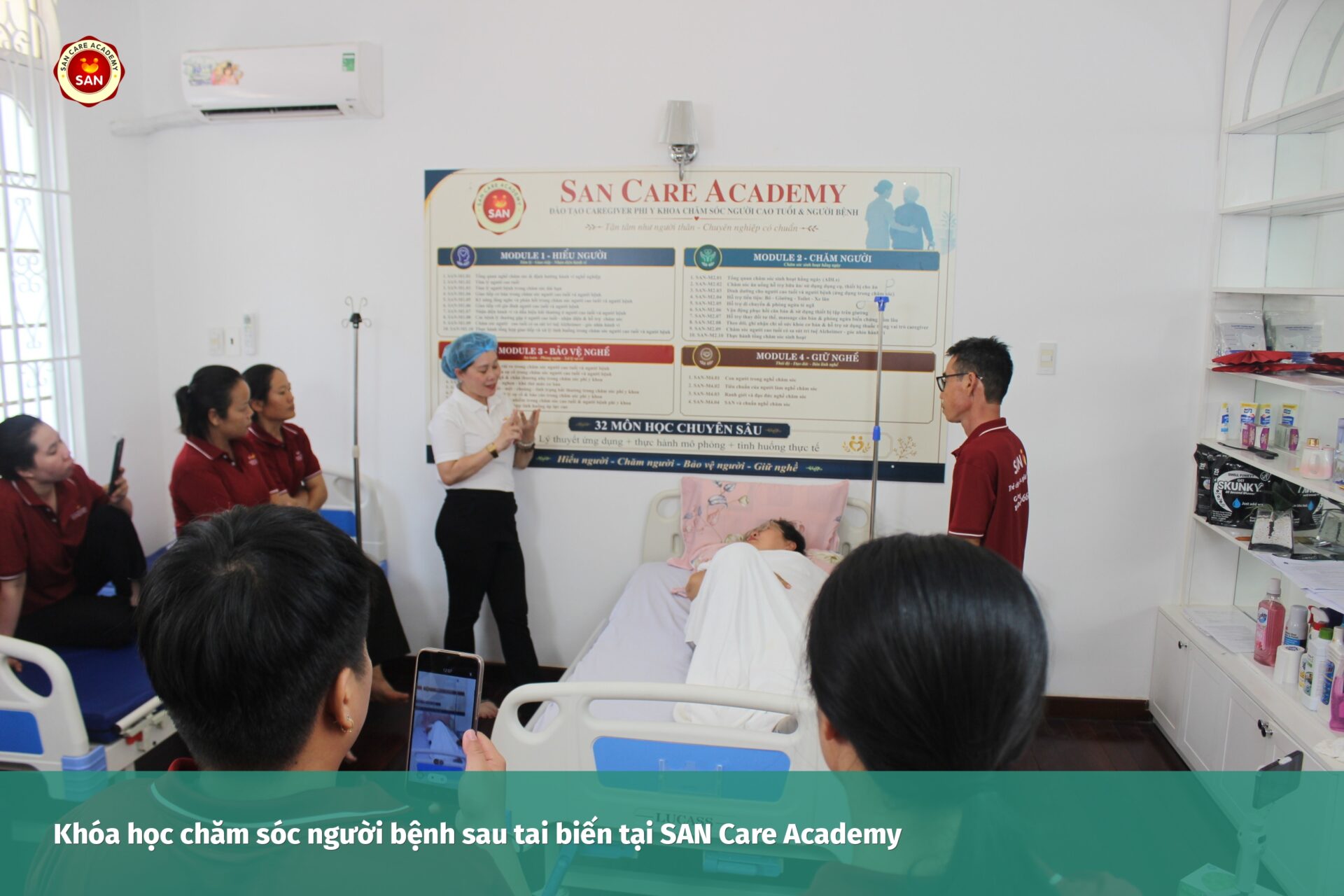
Caring for a stroke patient requires more than just good health. Caregivers need to know how to provide the right support, communicate effectively, observe properly, and know when to notify family or medical professionals.
Course on post-stroke patient care at SAN Care Academy This program is designed for people who want to learn patient care, those caring for relatives after a stroke at home, those who have previously worked as caregivers but lack formal training, or those who want to improve their caregiving skills in cases where patients are weak, have mobility issues, or have difficulty communicating.
SAN Care Academy Training should be guided by the principles of: providing care within one's assigned duties, ensuring patient safety, preserving the dignity of those being cared for, and refraining from performing non-medical tasks without authorization.
Why do patients who have suffered a stroke need careful care?
After a stroke, patients may experience significant changes in their daily lives. Some may lose their ability to walk steadily. Others may experience weakness in their limbs, difficulty grasping objects, difficulty swallowing, unclear speech, or slower reaction times. Some may understand things but be unable to express themselves, leading to irritability or sadness.
Without proper training, even small things can create risks for caregivers. Helping a patient stand up incorrectly can cause them to fall. Feeding too quickly can cause them to choke. Failing to adjust their position properly can increase the risk of pressure ulcers. Impatient communication can make patients feel disregarded.
So, Caring for patients after a stroke. Caregiving requires caution, calmness, and understanding. Caregivers don't need to replace doctors or nurses, but they need to know how to provide proper support for daily activities, observe for unusual signs, and report them promptly.
Who is the stroke patient care course suitable for?
This course is suitable for those who want to vocational training in patient care at homeespecially Caring for patients after a stroke.This includes patients who are weak, have limited mobility, or require assistance with daily activities.
This course is also suitable for those who have previously worked as caregivers, nursing assistants, or orderlies. caregiver but they have not received proper training on how to support patients after a stroke.
For families caring for parents, grandparents, or relatives recovering from a stroke, the course helps family members understand how to provide safer care, prevent risks, and know the limits of what should be done at home.
Beginner It is still possible to learn if you have suitable health, a serious attitude, patience, and a desire to properly care for patients.
What do caregivers need to understand about patients after a stroke?
Patients recovering from strokes They need not only physical support. They also need emotional understanding.
Previously, patients could be self-sufficient, able to move around and make their own decisions. After a stroke, they may need others to help them with eating, dressing, using the toilet, moving around, or speaking on their behalf. This feeling of dependence can easily make patients feel sad, hurt, or irritable.
Some patients are uncooperative not because they are deliberately trying to be difficult, but because they are afraid of pain, falling, losing face, or being unable to express what they want. Some react slowly, speak indistinctly, or are unable to speak at all, making it easy for caregivers to lose patience if they don't understand.
SAN Care Academy to help students understand that Caring for patients after a stroke. It requires exceptional patience. Caregivers need to be able to listen attentively to the patient's words, facial expressions, gestures, and body language.
What will the students learn?
Course on post-stroke patient care at SAN Care Academy It focuses on practical skills for daily living, while also emphasizing safety, communication, and the limitations of non-medical caregivers.
Support for safe eating
Patients recovering from a stroke may eat slowly, chew weakly, have difficulty swallowing, or be prone to choking. This is one of the aspects of care that requires special attention.
Trainees are instructed on the principles of safe meal support: preparing the patient's posture, feeding slowly, observing the patient's expressions, avoiding forcing the patient to eat, and not making any changes to the diet without guidance from family or healthcare professionals.
Caregivers need to understand that mealtimes are not just about nutrition. Mealtimes are also a time when patients are easily tired, anxious, impatient, and feel dependent. Therefore, caregivers need to be both careful and gentle.
Personal hygiene support
Patients recovering from a stroke may need assistance with wiping themselves down, bathing, changing clothes, changing diapers, using the toilet, or changing bed sheets.
This is a very sensitive area of care. Patients may feel embarrassed, shy, or sad because they can no longer do personal tasks independently. If caregivers rush, speak insensitively, or show discomfort, the patient may be hurt.
SAN Care Academy guides students in providing hygienic care that is clean, safe, discreet, and respectful. Caregivers should not just get the job done, but help patients maintain their dignity.
Support for changing posture
Patients recovering from a stroke often experience aches, stiffness, difficulty turning over, or prolonged bed rest. Without assistance in changing positions, patients may become more uncomfortable and have an increased risk of pressure ulcers.
Trainees are instructed on the principles of assisting in changing positions within the scope of basic care, learning to observe the patient's reactions, avoiding pulling or jerking, refraining from rushing, and not performing movements beyond the instructions on their own.
Changing a patient's position may seem like a small thing, but if done correctly, it can make them more comfortable, keep them cleaner, and reduce many risks during home care.
Support for mobility and fall prevention.
After a stroke, many patients have difficulty walking, experience weakness on one side of their body, or lose confidence when standing up, sitting down, using the toilet, or moving around the room.
Falls are a very dangerous risk. A fall can cause pain, broken bones, fear of movement, or prolonged bed rest.
The course helps students understand the basic principles of assisting with mobility: observing the patient's abilities, preparing a safe space, not pulling the patient with excessive force, not allowing the patient to walk on their own unless it is safe, and always notifying the family if any unusual changes in mobility are observed.
Prevent choking while eating and drinking.
Preventing choking is a very important aspect of caring for patients after a stroke.
Patients may experience difficulty swallowing, coughing while eating, fatigue when chewing, or a tendency to choke. Caregivers need to be aware of any unusual signs during meals and report any frequent coughing, choking, difficulty swallowing, or decreased appetite.
SAN Care Academy emphasizes that caregivers should not attempt to treat a situation based on anecdotal evidence. If dangerous or unusual signs appear, they should notify family members or appropriate healthcare professionals.
Pressure ulcer prevention
Patients who have suffered a stroke and remain bedridden for extended periods or have limited mobility may be at risk of developing pressure ulcers.
Pressure ulcers don't develop overnight, but can start from negligence in daily care. Prolonged pressure on the skin, especially if it's moist, not properly cleaned, or not regularly monitored, can lead to damage.
Trainees are instructed on how to observe pressure points, maintain hygiene and dryness, assist with appropriate position changes, and notify family members if they notice redness, pain, heat, moisture, or any other unusual signs in the skin.
Communicating with patients who have difficulty speaking or moving.
Some stroke patients may speak indistinctly, slowly, have difficulty expressing themselves, or be unable to speak as they did before. This can easily frustrate the patient and lead to misunderstandings with caregivers.
Caregivers need to learn to slow down their communication, ask simpler questions, and observe the patient's facial expressions, gestures, eye contact, and reactions. They should avoid rushing, making inappropriate jokes, or speaking on behalf of the patient hastily.
SAN Care Academy helps students understand that communication in caregiving is not just about speaking. It's also about attitude, eye contact, tone of voice, patience, and the ability to respect patients even when they cannot express themselves clearly.
Monitor for basic abnormal signs.
Caregivers are close to the patient in their daily life, so they need to be able to observe any unusual changes.
Signs to watch out for may include feeling more tired than usual, poor appetite, shortness of breath, increased coughing, fever, increased pain, altered consciousness, falls, vomiting, dizziness, unusual sores, or behavior that is different from usual.
Non-medical caregivers should not self-diagnose or self-treat. Their crucial role is to recognize anything unusual, report it to the right person, and report it promptly.
Limitations of non-medical caregivers
Caring for patients after a stroke requires clear roles.
Non-medical caregivers can assist with daily activities, hygiene, feeding, changing positions, mobility, observation, and reporting. However, caregivers cannot independently prescribe medication, change medications, administer injections or infusions, treat complex wounds, perform intensive rehabilitation exercises, or perform medical interventions without appropriate expertise and authorization.
Knowing your limits is part of professionalism. A good caregiver isn't someone who does everything, but someone who knows how to do their job properly, knows when to report problems, and knows how to keep the patient safe.
Learning pathway at SAN Care Academy
SAN Care Academy designs its learning path step-by-step, helping students understand the profession, hone their skills, and better prepare for caring for stroke patients in a real-world environment.
Step 1: Initial consultation
Students are advised to identify their learning goals. Some learn to work as caregivers. Others learn to care for their parents or relatives after a stroke. Some have experience caring for the sick but want more formal training.
Entrance counseling helps students choose the right path, understand the course requirements, and know what they need to prepare.
Step 2: Learn the basics
Trainees learn fundamental knowledge about post-stroke patients, patient psychology, principles of non-medical care, safety in daily life, and professional ethics in caregiving.
This phase helps trainees understand that caring for stroke patients cannot rely solely on personal health or experience.
Step 3: Practice the skills
Trainees are guided through practical exercises in common caregiving scenarios such as assisting with feeding, personal hygiene, changing positions, assisting with mobility, communication, and reporting.
Practical training helps trainees feel less awkward, learn to work carefully, and develop safer caregiving habits.
Step 4: Supervised Internship
For suitable students, after the initial foundational learning phase, SAN can guide them towards supervised internships.
This phase helps trainees become familiar with a real caregiving environment, develop professional skills, learn how to communicate with families, and may receive some financial support during their internship.
Step 5: Career Guidance
After the course, suitable participants may receive career guidance in home care settings. elderly care at home, nursing homes, care centers, or SAN's ecosystem of care services.
Job opportunities depend on skills, attitude, health, academic performance, and the practical requirements of each position.
What can I do after graduating?
Upon completing the course and meeting the appropriate requirements, trainees can pursue careers in home care for stroke patients, elderly and frail care, assisting patients with limited mobility, caring for bedridden patients, or working in other suitable care environments.
For those learning to care for a loved one, the course helps families understand how to provide safer care, prevent falls, choking, and pressure sores, and know when to call medical personnel.
Can I learn even without experience?
Maybe.
Beginners can still take a stroke patient care course if they are in good health, have patience, a serious attitude, and a desire to learn from the beginning.
SAN Care Academy guides students from foundational knowledge to practical skills. Learners don't need to know everything from the start, but they need to understand that caring for patients after a stroke requires careful attention, responsibility, and respect for non-medical boundaries.
Why choose SAN Care Academy?
SAN Care Academy is built upon the practical experience of caring for the elderly and the sick at home within the SAN ecosystem. Therefore, the curriculum closely follows common situations, not just general theory.
Trainees are trained in professional skills, attitudes, and ethics. This is especially important when caring for patients after a stroke, as patients are often sensitive, vulnerable, and require patient support.
SAN Care Academy trains students with the following principles: providing proper care, ensuring safe care, preserving patient dignity, knowing limits, and reporting problems promptly.
Frequently Asked Questions about the Stroke Patient Care Course
Is this course suitable for beginners?
Yes. Beginners can still learn if they are in good health, have a serious attitude, and a desire to learn proper caregiving skills.
After completing the course, will I be able to care for stroke patients at home?
Suitable trainees may be oriented towards providing post-traumatic patient care in non-medical settings. Employment depends on skills, attitude, health, academic performance, and the practical requirements of each individual case.
Does the course include practical exercises?
Yes. SAN Care Academy emphasizes practical training because caring for stroke patients requires real-world skills, meticulousness, and the ability to handle everyday situations.
Can caregivers independently perform rehabilitation exercises for patients?
Non-medical caregivers should not attempt intensive rehabilitation exercises on their own without appropriate professional guidance. Caregivers may assist with daily activities, observe, report, and follow assigned instructions.
Are students taught how to prevent falls, choking, and bedsores?
Yes. These are important topics in the course because stroke patients are often at risk of falls, choking while eating and drinking, and pressure ulcers if they lie down for long periods or have limited mobility.
Will I receive a certificate upon completion of the course?
Depending on the program, students who complete the course may receive a certificate of completion. While the certificate demonstrates the learning process, practical skills and professional attitude remain crucial.
Is studying to care for parents after a stroke appropriate?
Very suitable. The course helps families understand how to provide safer care, know how to avoid risks, and know when to notify medical professionals.
Is it possible to work while studying?
Depending on the course schedule, SAN can advise on a suitable learning path for working professionals or those with limited time.
Register for a consultation on a course on post-stroke patient care.
If you are looking to learn stroke care to get a job, to care for your parents or relatives at home, or to improve your caregiving skills, SAN Care Academy We can advise on a suitable travel route.
You can register to receive a consultation:
- The course is suitable for your personal goals.
- Latest tuition fees and class schedules
- Course duration and practical content
- Supervised internship conditions
- Job placement opportunities after the course.
Sign up for a consultation today to learn how to care for stroke patients in a systematic, safe, and responsible manner.
Are you caring for a patient recovering from a stroke and unsure of the right approach?
Let SAN Care Academy advise you on the right learning path: learning to care for loved ones, learning to work, or learning to develop a long-term career in caregiving.


