
Elderly care course at SAN Care Academy
Older adults need more than just someone to be there for them. They need proper care, to be listened to, to be respected, and to be protected from the common risks of daily life.
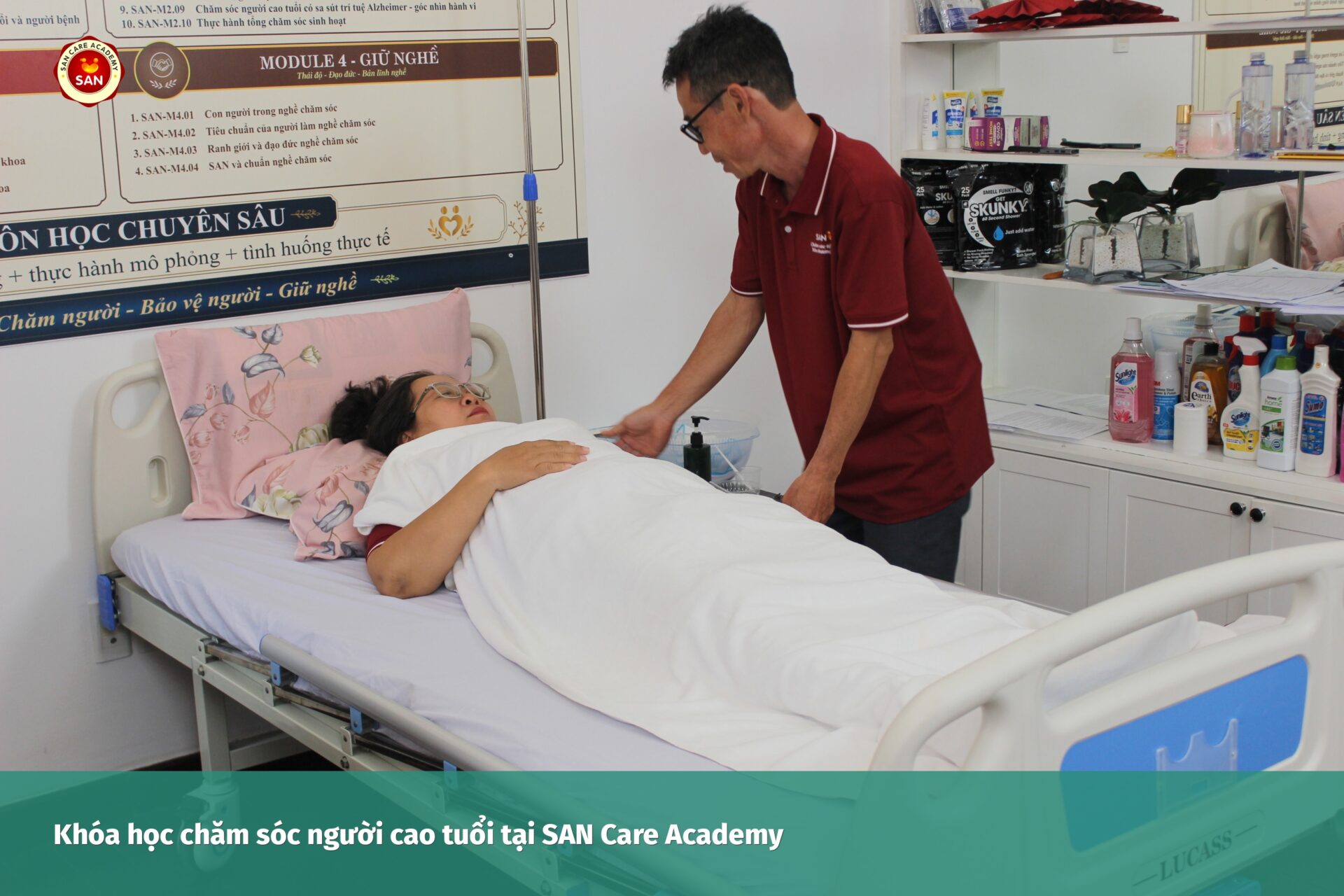
A meal for the elderly, helping them stand up, changing their clothes, a kind word when they are irritable… all of these can become important tasks. take care of That's true, or unintentionally, it can harm the elderly if caregivers haven't received proper training.
Elderly care course in SAN Care Academy It was built for people who want to learn a trade. caring for the elderly In a practical way, with the right skills, attitude, and opportunities for long-term career development.
Why is it important to learn proper elder care?
Elderly care It's a seemingly simple task, but in reality, it requires a great deal of knowledge.
Elderly people may have weak legs, be prone to falls, have difficulty eating, sleep poorly, be forgetful, easily feel sad or uncooperative in daily activities. If caregivers rely solely on personal experience and do not understand safety principles, even a small mistake can have serious consequences.
Incorrect posture when assisting the elderly can cause pain or falls for both caregivers. Feeding too quickly can cause choking. Changing diapers or performing hygiene tasks without discretion can embarrass the elderly. Speaking impatiently can make the elderly feel disrespected.
So, learn elderly care It's not just about learning "manual labor." It's about learning to understand the elderly, providing proper care, communicating appropriately, and knowing how to avoid risks.
Who is the senior care course suitable for?
Elderly care course This is suitable for those who want it. learn a trade in elderly care To go to work, someone who is looking for a practical, stable, and socially meaningful job.
This course is also suitable for those who have previously worked as domestic helpers, caregivers, or elderly caregivers but have not received formal training. With proper training, existing experience will become a good foundation for becoming more professional in the field.
Additionally, the course is also for middle-aged people who want to switch to a caregiving career, those with no medical experience who want to start from scratch, or family members who want to learn how to care for their elderly grandparents or parents at home.
The most important thing is not whether the trainee has prior work experience, but rather whether they have suitable health, patience, a kind attitude, and a serious commitment to learning the trade.
What will the students learn?
Elderly care course in SAN Care Academy It is designed with a practical focus and closely follows common caregiving situations encountered in daily life.
Trainees not only learn general knowledge but also how to apply it to specific tasks when caring for the elderly at home, in care facilities, or in a real-world work environment.
Understanding the psychology of the elderly
Older people experience changes not only in their health, but also in their emotions and psychology.
Some elderly people tend to repeat the same story. Some are easily irritated. Some don't want to eat, bathe, or cooperate. Some are very afraid of becoming a burden to their children and grandchildren. Some are sad because they feel they are no longer listened to as they used to be.
Trainees are guided to view these behaviors with understanding, rather than hastily judging that the elderly are "difficult" or "making things hard for themselves."
When understood psychology of the elderlyWith this, caregivers will know how to communicate more gently, be more patient, and remain calm in difficult situations.
Support for safe eating
Eating is a daily routine, but for the elderly, it's a very important part of their care.
Elderly people may eat slowly, chew weakly, have difficulty swallowing, easily choke, or lose their appetite. Caregivers need to know how to prepare a suitable sitting position, support the elderly person in eating slowly, observe for any unusual signs, and avoid rushing or stressing them.
The course helps participants understand that feeding the elderly is not just about "getting the meal over with," but a process that requires care, respect, and safety.
Personal hygiene support
Personal hygiene is a very sensitive aspect of caring for the elderly.
Many elderly people feel embarrassed, ashamed, or saddened when they need help with bathing, dressing, changing diapers, or personal hygiene. Therefore, caregivers need to know how to perform these tasks correctly while also maintaining discretion and dignity for the person being cared for.
Trainees are instructed on how to assist with personal hygiene in a way that is clean, safe, discreet, and does not make the elderly feel disrespected.
Support for mobility and fall prevention.
Falls are a major risk for older adults.
A fall can cause pain, fractures, loss of confidence in walking, or prolonged bed rest for the elderly. Therefore, caregivers need to learn how to observe their environment, assist with standing, sitting, walking, and using assistive devices carefully.
This course helps students understand the basic principles for reducing the risk of falls in daily life, especially in bedrooms, bathrooms, stairs, and other areas prone to slips.
Preventing choking, preventing ulcers, and common risks.
Elderly people Weakness, prolonged bed rest, or lack of physical activity can lead to various risks such as choking while eating, pressure ulcers, pain, fatigue, infections, or sudden changes in health.
Caregivers are not a replacement for doctors or nurses, but they need to be observant and report any unusual signs promptly.
SAN Care Academy Trainees are trained according to the following principles: perform their assigned caregiver duties correctly, do not take on responsibilities beyond their scope, and always know when to notify family or medical personnel.
Communicate and report to family.
A good caregiver not only knows how to care for the elderly, but also knows how to provide clear reports to the family.
The family needs to know how the elderly person is eating and sleeping today, whether there are any unusual signs, whether their mood has changed, whether they have fallen, experienced pain, coughed, felt tired, lost their appetite, or are generally unwell.
Trainees are guided on how to observe, record, and report concisely, honestly, and clearly. This is a crucial skill that helps families feel secure and enables caregivers to work more professionally.
Learning – Practice – Internship Pathway
Elderly care course in SAN Care Academy Instead of following a rigid, theoretical learning approach, the curriculum is designed to help students gradually understand the profession, become familiar with the skills, and gain exposure to a real-world environment.
Phase 1: Initial Consultation
Before starting, students receive counseling to determine their learning goals. Some learn to get a job. Some learn to care for elderly parents. Some learn to change careers. Some have experience in patient care but want to acquire more formal skills.
Initial counseling helps SAN Care Academy propose a suitable learning path, preventing students from pursuing the wrong goals or having unrealistic expectations about the profession.
Phase 2: Learning the foundation
Trainees learn fundamental knowledge about the elderly, the psychology of older adults, daily caregiving skills, safety in caregiving, and professional ethics.
This is a crucial stage that helps trainees understand that the caregiving profession requires not only diligence but also knowing how to do things correctly.
Phase 3: Skill Practice
After learning the basics, students are guided through practicing fundamental caregiving procedures.
Practical training helps trainees overcome awkwardness, learn how to handle common situations, and develop careful work habits. The caregiving profession requires skilled hands, but also a compassionate heart that knows when to stop, observe, and protect those being cared for.
Phase 4: Supervised Internship
For suitable students, after the initial foundational learning phase, SAN can guide them towards supervised internships.
Internships help trainees become familiar with a real caregiving environment, understand the actual work rhythm, develop professional skills, and may receive some financial support during their internship.
This phase also helps SAN assess the trainees' suitability in terms of skills, attitude, integrity, communication abilities, and readiness for employment.
Phase 5: Career Guidance
After the course, suitable students may be guided towards employment in environments such as: home care for the elderly, home care for the sick., nursing homes, senior care centers, or SAN's ecosystem of care services.
SAN doesn't promise easy jobs. Instead, SAN trains students in a practical way, giving them a better foundation to enter the profession seriously.
What can I do after graduating?
After completion elderly care course And if they meet the appropriate requirements, trainees can pursue a variety of jobs related to elderly care.
Trainees can provide care for the elderly at home, assist with daily living for seniors, care for the frail elderly, care for the elderly and infirm, assist in nursing homes and senior care centers, or participate in SAN's care service system if they meet the standards.
For students learning to care for their loved ones, the course helps families care for their elderly grandparents and parents more effectively, safely, and reduces mistakes caused by lack of experience.
Can I learn even without experience?
Have.
Elderly care course SAN Care Academy is suitable for beginners. Students do not necessarily need a prior medical background, but they should have good health, patience, a kind attitude, and a serious commitment to learning the trade.
SAN will provide step-by-step guidance, from fundamental knowledge to practical skills. Beginners don't need to know everything from the start, but they should be prepared to learn correctly, do things correctly, and correct their mistakes correctly.
Caregiving is a profession that can begin with kindness, but to succeed in the long run, it requires proper training.
Why choose SAN Care Academy?
SAN Care Academy is built upon the practical experience of caring for the elderly and the sick within the SAN ecosystem. Therefore, the curriculum doesn't just focus on general theory, but closely follows the tasks caregivers will encounter in their work.
Trainees receive training in skills, attitude, and professional ethics. This is very important because families need not only someone who knows how to do the job, but also someone trustworthy.
SAN Care Academy emphasizes core values in the caregiving profession: understanding the elderly, proper care techniques, risk prevention, honest reporting, protecting family assets, maintaining privacy, and behaving kindly in difficult situations.
Studying at SAN is not just about taking a short course; it's about starting a career with established standards.
Frequently Asked Questions about the Elderly Care Course
Is the elderly care course suitable for beginners?
Have. Elderly care course Suitable for beginners, those with no prior medical experience, those wishing to learn aged care, or those who want to properly care for their elderly parents at home.
Will I receive a certificate upon completion of the course?
Depending on the program, students who complete the course may receive a certificate of completion. The certificate is part of their academic record, but for long-term career success, students still need practical skills, the right attitude, and suitability for the job.
Does the course include practical exercises?
Yes. SAN Care Academy emphasizes practical training because the caregiving profession cannot be learned solely through theory. Students need to practice real-life situations, scenarios, and communication skills.
Will I be offered a job after graduation?
SAN Care Academy provides internship and job placement guidance for its students. Placement depends on academic performance, attitude, health, skills, and the specific needs of each position.
Is it possible to work while studying?
Depending on the course schedule, SAN can advise on a suitable learning path for working professionals or those with limited time.
Can older people learn?
Yes, it's possible. People aged 40-50 can still learn the profession of elderly care if they have suitable health, patience, and a serious attitude towards the job.
Can men learn the trade of caring for the elderly?
Yes. Men can absolutely study and work in aged care, especially in roles requiring mobility assistance, care for critically ill patients, or shift-based care.
Is learning how to care for elderly parents at home appropriate?
This is very suitable. If you want to care for your elderly parents more effectively, the course will help you understand the psychology of the elderly, learn how to assist with daily activities, prevent falls and choking, and avoid common mistakes.
Register for a consultation on the elderly care course.
If you are interested in learning a profession in aged care, consider studying elderly care to go to work, or to study so that they can take better care of their elderly parents at home. SAN Care Academy We can advise on a suitable travel route.
You can register to receive a consultation:
- The course is suitable for your personal goals.
- Latest tuition fees and class schedules
- Study time and practical training schedule
- Supervised internship conditions
- Job placement opportunities after the course.
Sign up for a consultation today to start learning! elderly care In a systematic, practical, and valuable way.


