
Caring for patients at Thong Nhat Hospital: why not just 24-hour shifts?
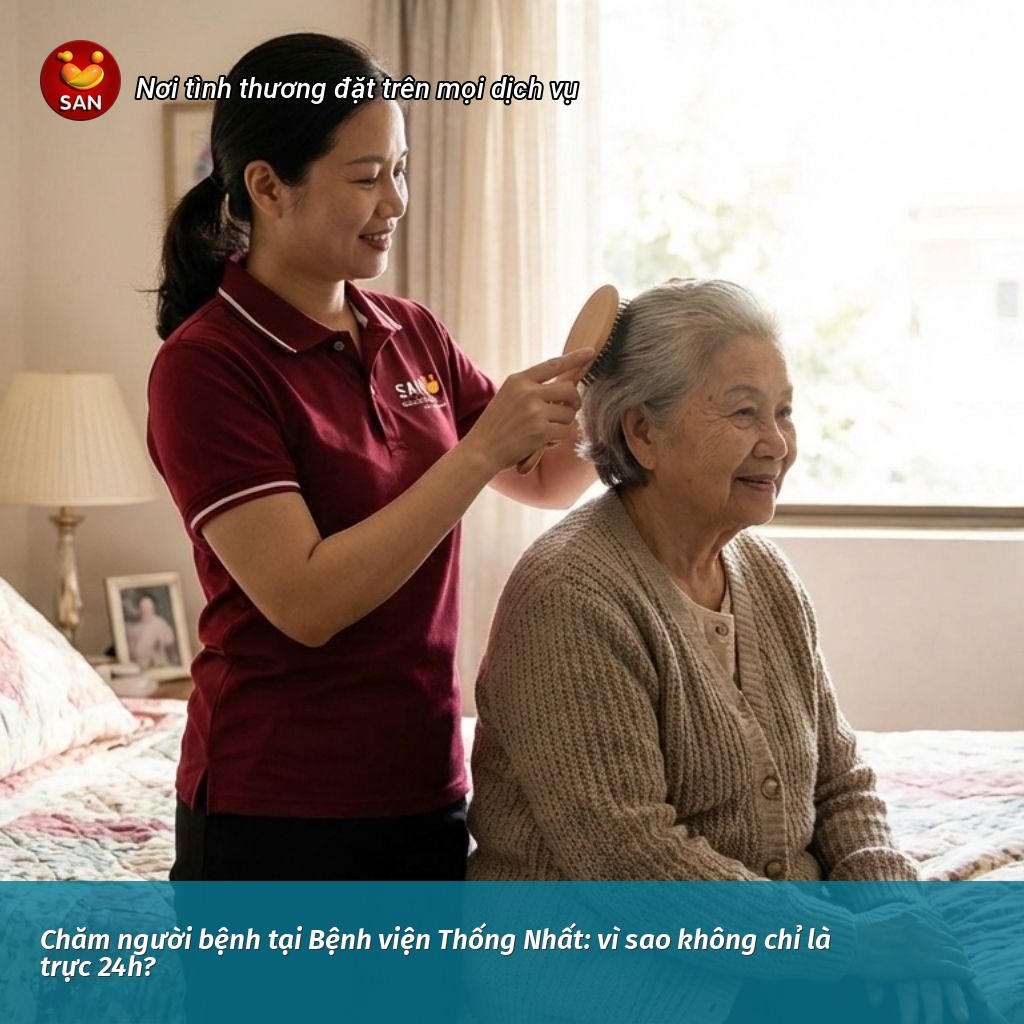
A son sits by the hospital bed. at Thong Nhat Hospital.
The first night was manageable.
I started to get tired on the second night.
By the third day… I was almost completely exhausted.
The family started thinking about it. hire a caregiver.
But the biggest question isn't "to hire or not to hire."
Instead, the question is: "Does that person know how to provide proper care?"
❗ Common mistake: caring for the sick = being by their side
Many people think that:
- Caring for the sick means looking after them.
- Being on duty
- Available 24/7
But the reality is hospitalPatient care includes:
- Monitor for abnormal signs.
- Support proper movement
- Coordinate with nurses.
- Quick response
👉 Not everyone can do it.
⚠️ Why are there still potential risks when caring for a child in the hospital?
1. The caregiver lacks basic medical knowledge.
- Failing to recognize danger signs.
- Not knowing when to call a nurse.
- I don't understand the patient's condition.
👉 Particularly dangerous for:
- Cardiovascular disease
- After a stroke
- Respiratory diseases
2. Lack of coordination with healthcare workers
In the hospital:
- Nurses cannot be present 24/7.
- Caregivers are an "extended arm" of the family.
But if:
- I don't understand the instructions.
- Not following the process closely
👉 Easily leads to mistakes
3. Exhaustion – loss of concentration
Family members often care for the sick.:
- Staying up late
- Prolonged stress
- No time off.
Consequences:
- Distraction
- Missing important signs
4. Hiring caregivers based on word-of-mouth recommendations.
Many families:
- Rent through referral
- No background check
- No guarantee
Risks:
- Responsibility is unclear.
- There are no service standards.
🧠 What is truly needed in hospital care?
A good caregiver needs:
- ✔ Closely monitor the condition
- Blood pressure
- Breathing
- Level of alertness
- ✔ Living assistance
- Eat and drink
- Toilet
- Move
- ✔ Coordinate with nurses
- Report promptly.
- Follow the instructions carefully.
- ✔ Understand the underlying condition
- Cardiovascular
- Stroke
- Respiration
👉 These are the factors that determine safety for patients
⚠️ 800k/day: What are you paying for?
Many families accept this level:
- 600,000 - 1,000,000 VND/day
But the reality is:
- Service standards are unclear.
- No training
- No quality control
👉 The issue isn't the price.
👉 It's about the actual value received.
💡 Solution: Systematic healthcare
Instead of relying on luck, we need to:
- Trained caregiver
- There is a clear process.
- Quality control is in place.
- Having specific responsibilities
👉 Here's the difference between:
- "Someone is taking care of me"
- and
- "to be properly cared for"
🤝 SAN – Standardizing patient care in hospitals
At Thong Nhat Hospital, SAN provided support:
- Provide trained caregivers.
- According to a clear care procedure
- There are background checks and accountability measures.
- Coordinate with the family and the hospital.
👉 Not just about staying behind
👉 And that's the person who ensures the safety of the patient.
🎯 Conclusion
Caring for the sick Being in the hospital isn't simply about being on duty.
That is an important role, directly affecting:
- Recovery process
- Risk of complications
- Treatment results
If done correctly:
👉 Patients stabilize faster
If you make a mistake:
👉 Risks can occur at any time.
📲 Download the SAN app to book caregiver at the hospital, monitoring the quality of care and connecting services. after discharge from hospital.


