
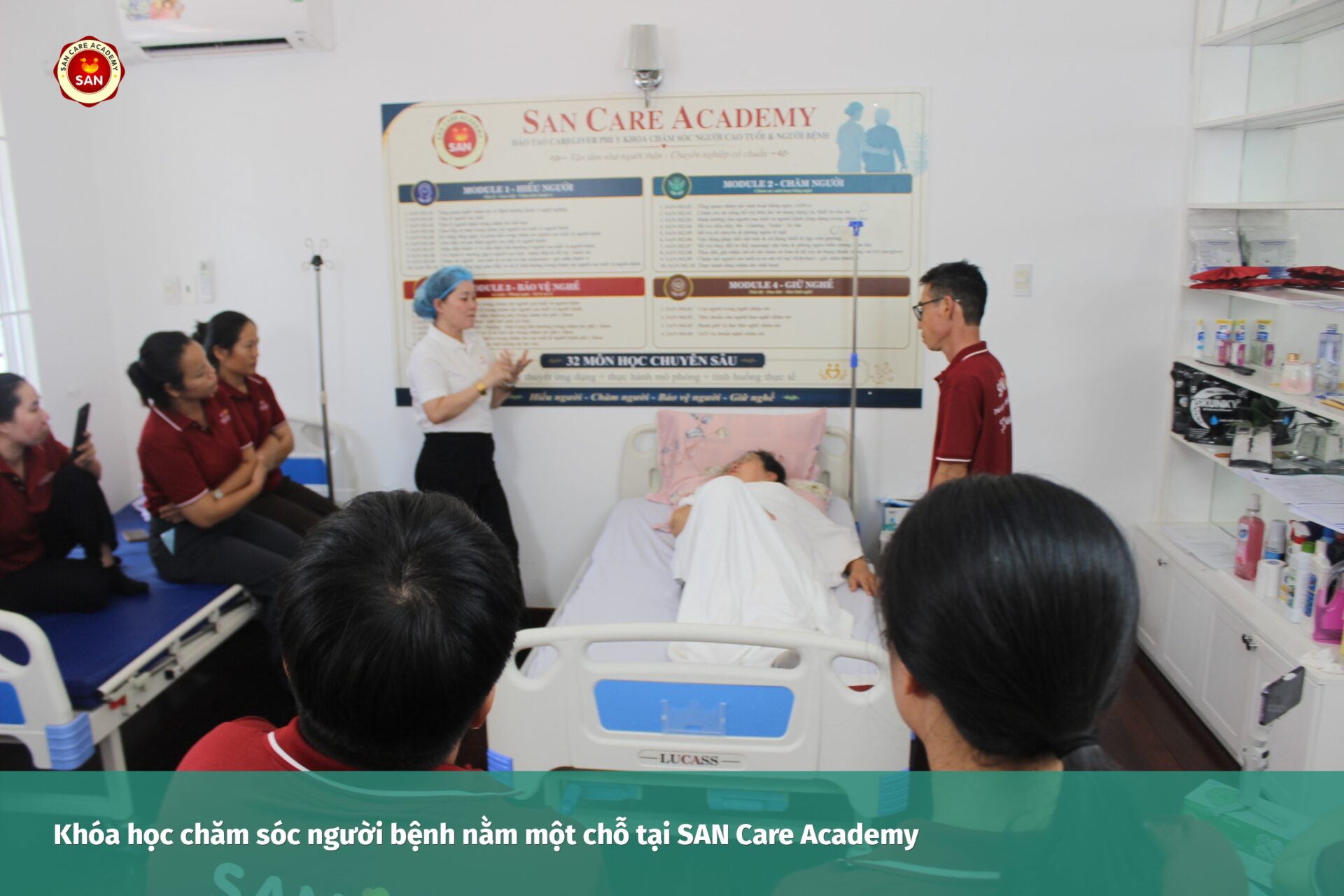
The SAN Care Academy offers a course in caring for bedridden patients.
Caring for bedridden patients It is a job that requires a great deal of care, patience, and skill. Bedridden patients often need not only someone by their side, but also assistance in almost all daily activities: eating, hygiene, changing clothes, changing diapers, changing sheets, turning over, monitoring skin, preventing bedsores, and maintaining emotional stability.
A bedridden patient can easily feel helpless, embarrassed, and resentful. Even very private tasks like personal hygiene, changing diapers, wiping, or dressing require assistance from others. Therefore, caregivers not only need to know how to perform these tasks correctly but also need to know how to make the patient feel respected.
Course caring for bedridden patients in SAN Care Academy Built for people who want vocational training in patient careThis includes people who are caring for bedridden relatives at home, those who have experience in patient care but lack formal training, or those who want to improve their caregiving skills in cases where patients are highly dependent on caregivers.
Why do bedridden patients need proper care?
Patients who are bedridden for extended periods are at risk of experiencing numerous health and lifestyle problems. Without proper support, they may suffer from pressure ulcers, aches and pains, discomfort, infections, choking while eating and drinking, constipation, insomnia, or mental decline.
Many people think that caring for a bedridden patient simply involves feeding, changing diapers, and cleaning. But in reality, each task requires understanding. Incorrect diaper changes can cause discomfort or skin damage. Improper turning can cause pain. Neglecting pressure sores can lead to missed early signs of ulcers. Insensitive communication can cause embarrassment or feelings of being a burden to the patient.
So, learning patient care Being bedridden isn't just about learning manual skills. It's about learning how to provide safe, clean, discreet, respectful, and responsible care.
Who is the course on caring for bedridden patients suitable for?
This course is suitable for those who want to vocational training in patient care at home, especially caring for bedridden patients, the patient is weak, post-surgery patientsThis includes patients recovering from strokes or elderly people who are unable to perform daily activities independently.
This course is also suitable for those who have previously worked as caregivers or nurses. caregiver Or they may have cared for a relative before but haven't received formal training on how to care for a bedridden patient.
For families with parents, grandparents, or other relatives who are bedridden for an extended period at home, this course helps family members understand how to provide proper care, prevent common risks, and know when to notify medical personnel.
Beginners can still learn if they have the right health, patience, a serious attitude, and a desire to learn. proper patient care.
What do caregivers need to understand about bedridden patients?
Bedridden patients are often highly dependent on their caregivers. They may need assistance with eating, hygiene, changing clothes, turning over, getting water, adjusting pillows, talking, or calling family members.
This dependence can easily make patients feel sad, irritable, ashamed, or insecure. Some patients don't talk about it, but are very embarrassed to ask others to change their diapers or help with personal hygiene. Others become easily angered due to pain, fatigue, or a feeling of losing control.
Caregivers need to understand that these reactions should not be individualized. Patients are not always "difficult." Often, they are in pain, afraid, embarrassed, or sad because they are living in a state of dependence.
SAN Care Academy This program helps students learn how to care for bedridden patients with both skill and respect. Performing the procedures correctly is essential, but maintaining the patient's dignity is what truly distinguishes a qualified caregiver.
What will the students learn?
The course on caring for bedridden patients at SAN Care Academy Focus on practical skills that caregivers commonly encounter during home care.
Trainees are instructed on how to assist with daily activities, personal hygiene, changing positions, preventing bedsores, assisting with eating, observing for abnormal signs, and reporting to family members within the scope of non-medical care.
Providing personal hygiene assistance for bedridden patients.
Personal hygiene is one of the most important aspects of caring for bedridden patients.
Patients may need assistance with body cleaning, genital hygiene, changing clothes, changing diapers, brushing hair, oral hygiene, changing bed sheets, and keeping the body dry. These tasks should be performed cleanly, carefully, and discreetly.
Trainees are instructed that patient hygiene is not just about "cleaning." Caregivers need to prepare in advance, provide appropriate covering, explain things gently to the patient, proceed step-by-step, and avoid creating feelings of embarrassment.
Proper handling helps keep the patient cleaner. The right attitude helps the patient feel less self-conscious.
Safe diaper changes, clothing changes, and sheet changes.
Changing diapers, clothes, and bedsheets for bedridden patients are skills that need to be learned carefully.
If done too roughly, the patient may experience pain. If done hastily, the patient may feel treated like an object. If proper hygiene is not maintained, the patient's skin may become irritated or infected.
SAN Care Academy Instruct trainees on how to prepare supplies, maintain discretion, assist patients in changing positions, observe the skin during diaper or clothing changes, and notify family members if any abnormalities are observed.
Caregivers need to remember that these are very private matters. Doing things correctly is important, but doing them with sensitivity is even more crucial.
Turning and preventing pressure ulcers
Patients who are bedridden for extended periods are at risk of developing pressure ulcers, especially in areas of the body that are frequently subjected to pressure.
Pressure ulcers can begin with minor signs such as redness, pain, warmth, moisture, discoloration of the skin, or the patient complaining of discomfort in the pressure area. Without careful observation, these early signs can be overlooked.
Trainees are instructed on the principles of observing pressure-prone skin areas, keeping the patient's body dry and well-ventilated, assisting with appropriate position changes, and refraining from treating complex skin lesions without professional guidance.
Turning patients over is not just about relieving fatigue. It's also an important part of preventing bedsores and protecting the health of bedridden patients.
Support with eating and drinking.
Bedridden patients may have more difficulty eating than usual. Some eat slowly, feel tired, choke easily, have no appetite, or need assistance with every little bit of food.
Caregivers need to know how to prepare the patient's posture, assist them in eating slowly, observe for any unusual signs, and avoid forcing the patient to eat in a way that causes stress.
Trainees were emphasized that caregivers should not arbitrarily change the diet, administer medication, supplements, or special foods without guidance from family members or healthcare professionals.
Proper meal support helps patients feel safer, more comfortable, and cared for with respect.
Maintain hygiene in the area around the patient's bed.
Patients who are bedridden typically spend most of their time around their bed. Therefore, the area around the bed needs to be clean, tidy, and safe.
Caregivers need to know how to arrange necessary items within easy reach, keep bedding clean, avoid clutter, check for slippery areas, and ensure the patient can call for assistance when needed.
A tidy care environment not only makes patients more comfortable, but also helps caregivers work more efficiently and reduces the risk of incidents.
Observe for any unusual signs.
People non-medical care This is not a replacement for doctors or nurses, but it's important to be aware of and observe any unusual signs in daily life.
Signs to watch out for may include fever, shortness of breath, increased coughing, poor appetite, increased pain, altered consciousness, unusual redness of the skin, sores, vomiting, abnormal bowel or bladder function, increased fatigue, or any other unusual symptoms.
When noticing unusual signs, caregivers should not attempt to diagnose or treat the condition themselves. The right course of action is to notify family members, the caregiver, or appropriate healthcare professionals.
Communicating with bedridden patients
Patients who are bedridden for extended periods are prone to sadness, loneliness, or feelings of worthlessness. Therefore, communication is a crucial part of care.
Caregivers need to speak gently, give advance notice before performing any caregiving procedures, ask about the patient's feelings, listen to their reactions, and avoid making the patient feel disrespected.
There are seemingly ordinary things that can hurt patients, such as complaining in front of them, calling them "annoying," "difficult," or "a waste of time," or talking to others as if the patient isn't present.
SAN Care Academy helps students understand that bedridden patients still need to be treated as human beings with emotions, self-respect, and a need to be heard.
Limitations of non-medical caregivers
Non-medical caregivers may assist with daily activities, hygiene, diaper changes, dressing, feeding, position changes, observation, and reporting. However, caregivers are not permitted to prescribe medication, change medications, administer injections or infusions, treat complex wounds, debride ulcers, perform medical interventions, or make diagnoses without appropriate expertise and authorization.
Knowing your limits is part of safety. Professional caregivers aren't about doing everything, but about knowing how to do their job properly, knowing when to give warnings, and protecting patients from unnecessary risks.
Learning pathway at SAN Care Academy
SAN Care Academy designs its learning path with a practical approach, helping students gradually understand the profession, hone their skills, and better prepare for caring for bedridden patients in a real-world environment.
Step 1: Initial consultation
Students receive guidance to determine their learning goals. Some learn to work as caregivers. Others learn to care for parents or relatives who are bedridden for extended periods at home. Some already care for the sick but want to improve their skills to become more professional.
Entrance counseling helps students choose the right path, understand the course requirements, and prepare themselves accordingly.
Step 2: Learn the basics
Trainees learn fundamental knowledge about bedridden patients, patient psychology, principles of non-medical care, safety in daily life, and professional ethics in patient care.
This phase helps trainees understand that caring for bedridden patients cannot rely solely on physical strength or diligence, but requires proper technique and keen observation.
Step 3: Practice the skills
Trainees are guided through practical exercises in common caregiving situations such as personal hygiene, diaper changing, sheet changing, feeding assistance, turning over, skin observation, communication, and reporting.
Practical training helps trainees reduce awkwardness, develop carefulness, and cultivate safer caregiving practices.
Step 4: Supervised Internship
For suitable students, after the initial foundational learning phase, SAN can guide them towards supervised internships.
This phase helps trainees become familiar with a real caregiving environment, develop professional skills, learn how to communicate with families, and may receive some financial support during their internship.
Step 5: Career Guidance
After the course, suitable participants may receive career guidance in home care settings. elderly care at home, nursing homes, care centers, or SAN's ecosystem of care services.
Job opportunities depend on skills, attitude, health, academic performance, and the practical requirements of each position.
What can I do after graduating?
Upon completing the course and meeting the appropriate requirements, trainees can pursue careers in home care for bedridden patients, elderly and frail individuals, post-surgical care, stroke care, assisting long-term bedridden patients, or working in other suitable care environments.
For those learning to care for a loved one, the course helps families understand how to provide better care, prevent pressure ulcers, support safe hygiene, maintain the patient's dignity, and know when to notify medical personnel.
Can I learn even without experience?
Maybe.
Beginners can still take a course in caring for bedridden patients if they are in good health, have patience, a serious attitude, and a desire to learn from the beginning.
SAN Care Academy guides students from foundational knowledge to practical skills. Learners don't need to know everything from the start, but they need to understand that caring for bedridden patients requires careful attention, responsibility, and respect for non-medical boundaries.
Why choose SAN Care Academy?
SAN Care Academy is built upon the practical experience of caring for the elderly and the sick at home within the SAN ecosystem. Therefore, the curriculum closely follows common situations, not just general theory.
Trainees are trained in professional skills, attitudes, and ethics. This is especially important when caring for bedridden patients, as these patients are often highly dependent, vulnerable, and require patient care.
SAN Care Academy trains students with the following principles: providing proper care, ensuring safe care, preserving patient dignity, knowing limits, and reporting problems promptly.
Frequently Asked Questions about the Bedridden Patient Care Course
Is this course suitable for beginners?
Yes. Beginners can still learn if they are in good health, have a serious attitude, and a desire to learn proper caregiving skills.
After completing the course, will I be able to care for bedridden patients at home?
Suitable trainees may be assigned to provide non-medical care for bedridden patients. Employment depends on skills, attitude, health, academic performance, and the practical requirements of each individual case.
Does the course include practical exercises?
Yes. SAN Care Academy emphasizes practical training because caring for bedridden patients requires real-world skills, attentiveness, and the ability to handle everyday situations.
Did they learn how to change diapers, change sheets, and perform personal hygiene?
Yes. These are important topics in the course because bedridden patients often need assistance with daily personal activities.
Is it possible to learn how to prevent pressure ulcers?
Yes. Students are instructed on the principles of skin observation, hygiene, assistance in changing to appropriate positions, and notifying family members when there are any unusual signs.
Can caregivers treat bedsores themselves?
Do not attempt to treat ulcers or complicated wounds yourself without proper expertise and guidance. Non-medical caregivers should notify family members or healthcare professionals if they notice any unusual signs.
Will I receive a certificate upon completion of the course?
Depending on the program, students who complete the course may receive a certificate of completion. While the certificate demonstrates the learning process, practical skills and professional attitude remain crucial.
Is studying to care for bedridden parents appropriate?
Very suitable. The course helps families understand how to provide safer care, maintain hygiene, prevent bedsores, support nutrition, and preserve the dignity of the patient.
Register for a consultation on a course in caring for bedridden patients.
If you are looking to learn patient care for the benefit of employment, to care for parents or relatives at home, or to enhance your caregiving skills, SAN Care Academy We can advise on a suitable travel route.
You can register to receive a consultation:
- The course is suitable for your personal goals.
- Latest tuition fees and class schedules
- Course duration and practical content
- Supervised internship conditions
- Job placement opportunities after the course.
Sign up for a consultation today to learn how to care for bedridden patients in a systematic, safe, and responsible manner.
Are you caring for a bedridden patient and unsure how to do it properly?
Let SAN Care Academy advise you on the right learning path: learning to care for loved ones, learning to work, or learning to develop a long-term career in caregiving.


