
Treatment at Pham Ngoc Thach Hospital – why do many families have to find someone to care for the patient at home to avoid exhaustion and readmission?
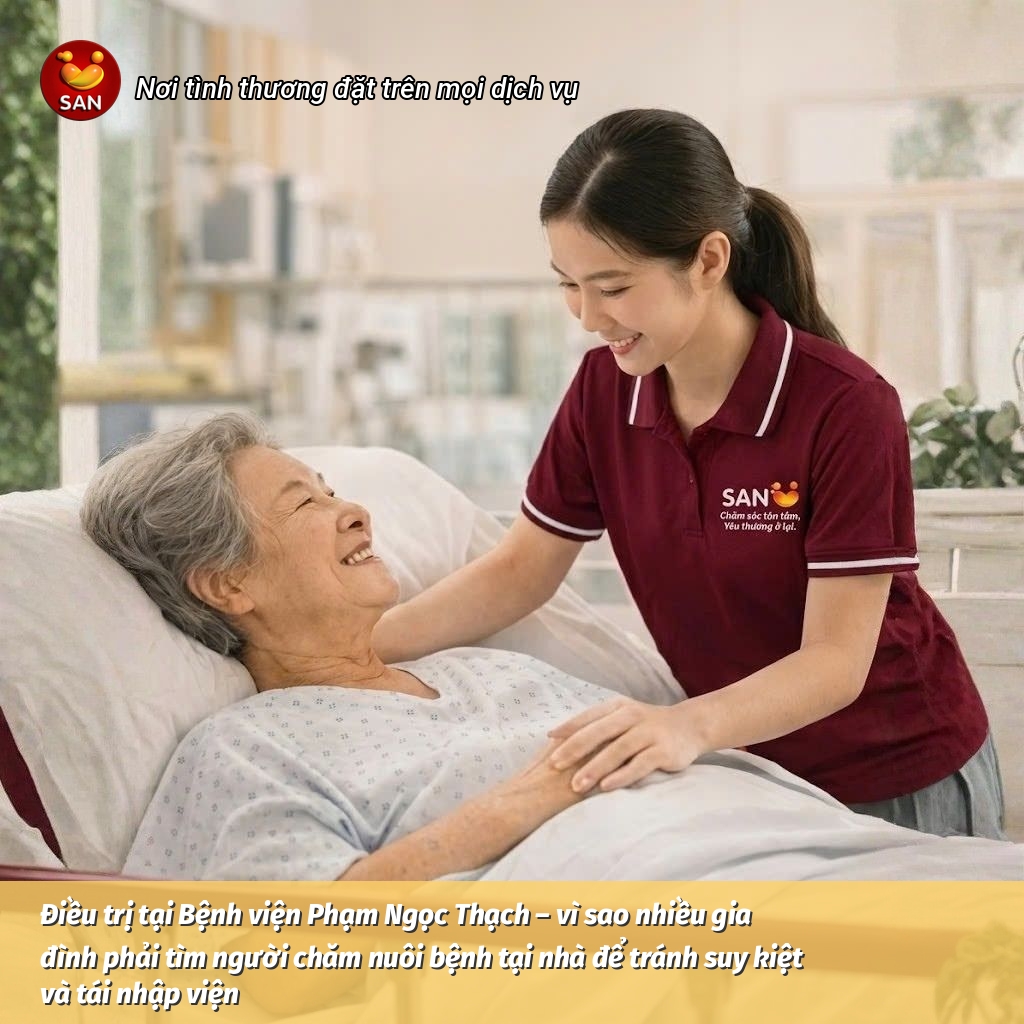
Pham Ngoc Thach Hospital not where the majority patients They arrived in an emergency.
But it is the place:
- chronic illness
- treatment for several months
- the body gradually weakens
This is a very different kind of disease:
- 👉 Not immediately dangerous.
- but Dangerous if not properly cared for.
When the illness does not resolve after discharge from the hospital
Common diseases here include:
- pulmonary tuberculosis
- chronic lung disease (COPD)
- respiratory failure
- post-infection
After treatment:
- The patient is stable.
- can be discharged from the hospital
But:
- 👉 The body has not yet recovered.
- 👉 health will not return to its former state.
The patient enters the "living with the disease" phase.
Unlike emergency care:
- 👉 The disease doesn't go away
- What is needed:
- continuous monitoring
- maintain treatment
- gradual recovery
As the body gradually weakens
Patients typically:
- tired
- shortness of breath
- poor appetite
- reduced strength
- 👉 and unable to control their own condition
Common mistakes
Many families think:
- Treatment completed
- Just take the medicine.
But the reality is:
- 👉 Respiratory illnesses and tuberculosis require daily discipline.
When the family starts to struggle.
Initial:
- self-care
- support
- monitor
But after a while:
- not strong enough
- could not be sustained
- The mistake began.
- 👉 This is when things started to go wrong.
When "finding people" becomes a necessity.
The family begins:
Initially, it was just for support.
But the reality is:
- 👉 This is the decisive factor in recovery.
When "needing people" becomes mandatory.
Patients need:
- followers
- pill reminder
- living assistance
- 👉 If there is a shortage, the situation will worsen.
And when things get urgent
No prior preparation:
- No replacement available.
- could not be sustained
- uncontrolled
- 👉 And many families fall into this trap:
- We urgently need a caregiver for a sick person.
The biggest mistake: underestimating the long-term nature of the disease.
- 👉 because it's not "critical immediately"
- → should be ignored
Actual consequences
- exhaustion
- readmission
- prolong treatment
- 👉 Costs increase over time.
💰 COMPARISON: SAN vs. SELF-ROTATING
1. COST
SAN:
- 👉 42K – 70K / hour
- flexible
Self-rotating:
- 👉 thought it would save money
- but couldn't sustain it.
2. MAINTENANCE
SAN:
- can last
- independent of one person
Self-rotating:
- exhausted
- easily interrupted
3. SCIENTIFIC SHIFT CHANGE 🔥
- 👉 extremely important for chronic illnesses
4. CONTROL
SAN:
- trained
- systematic
Self-rotating:
- uncontrolled
🔥 IMPORTANT QUESTION
- 👉 You are currently undergoing "treatment"...
- 👉 Or are you actually helping your loved one recover?
💡 SAN – A SOLUTION FOR CHRONIC ILLNESSES
SAN helps you:
- maintain continuous care
- Reduce the burden on the family.
- stability control
- 👉 without interruption.
When should we start?
👉 The correct answer:
- immediately upon discharge from the hospital
Not when:
- already weak
- has lost control
- has been readmitted to the hospital.
🎯 CONCLUSION
At Pham Ngoc Thach Hospital:
- Treatment helps control the disease.
- but recovery depends on care.
Patients are unable to monitor themselves..
Families cannot last forever..
👉 And that's why many families have to search. home caregiver.
📲 Download the App SAN today Find flexible, safe, and long-term caregivers. — help your loved ones avoid exhaustion and recovery the right way.
SAN care platform


