
Need a Caregiver in Vietnam? A Guide for Overseas Vietnamese Returning for Treatment
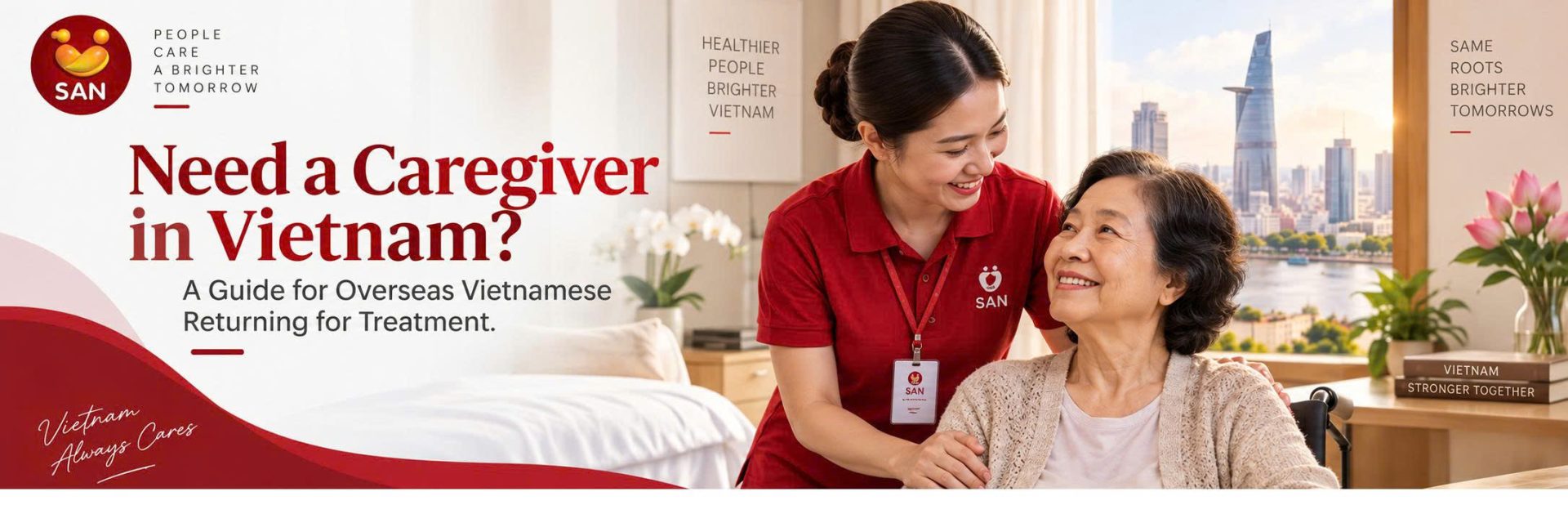
When an overseas Vietnamese patient decides to return to Vietnam for medical treatment, one question is often overlooked:
Who will provide practical care outside the doctor’s consultation room?
You may already have:
- a hospital;
- an appointment;
- a doctor;
- accommodation;
- transportation.
But if you are older, recovering from treatment, travelling alone or do not have relatives who can stay with you throughout the day, you may also need a caregiver.
The right solution depends on when, where and how much assistance you actually need.
-
A caregiver is not the same as a doctor or nurse
This distinction is important.
A caregiver supports the patient’s daily living and practical needs.
A medical professional is responsible for diagnosis, clinical monitoring, treatment, prescriptions and medical procedures.
At SAN, Cô SAN provides non-medical caregiving support.
Depending on the agreed service, this can include:
- assistance with meals;
- personal hygiene;
- mobility;
- everyday activities;
- companionship;
- hospital accompaniment;
- support at home;
- helping the patient prepare for follow-up visits;
- communication with a designated family member.
SAN caregivers do not independently diagnose conditions, alter medication or perform medical treatment outside their permitted scope.
-
When might an overseas Vietnamese patient need a caregiver?
Caregiving support may be useful if the patient:
- is elderly;
- has difficulty walking;
- is travelling to Vietnam alone;
- does not have close family nearby;
- requires help during a hospital stay;
- needs assistance after discharge;
- has several medical appointments;
- is recovering at a home, apartment or hotel;
- has family overseas who want a reliable local point of support.
You do not necessarily need 24-hour assistance.
Some families only need support for a hospital appointment or a few hours during the day.
Others need longer caregiving periods during treatment or recovery.
-
Caregiver for a hospital appointment
For an older adult, visiting a large hospital can be physically demanding.
The patient may need help with:
- preparing before leaving home;
- transportation;
- walking;
- carrying personal belongings;
- navigating the hospital;
- waiting between appointments;
- returning home afterward.
This is where a hospital companion can be particularly useful.
SAN has existing content on the full journey: → from arrival in Vietnam to the hospital visit
-
Caregiver during a hospital stay
If the patient is admitted to hospital, relatives may not always be able to remain at the bedside for the entire stay.
This is especially common when:
- family members must work;
- relatives live outside Ho Chi Minh City;
- treatment lasts several days;
- family members need rest;
- the patient needs practical assistance during certain periods.
A caregiver may support daily activities within the rules of the hospital and the agreed service scope.
Clinical care remains the responsibility of hospital professionals.
-
Caregiver after treatment or discharge
For many families, the biggest gap begins after leaving the hospital.
A patient may be medically ready for discharge but still need help with ordinary activities.
This may include:
- meals;
- bathing or personal hygiene;
- moving around the home;
- getting comfortable;
- organizing personal items;
- preparing for follow-up appointments.
SAN has existing guidance on: → home care after hospital discharge
and:
→ care after a medical appointment or short treatment
-
What if you are staying at your own home in Vietnam?
Some overseas Vietnamese return to a family home or their own property during treatment.
This can be comfortable, but the home may not be prepared for someone who has temporarily reduced mobility.
Families should consider:
- access to the bedroom;
- bathroom safety;
- clear walking paths;
- meal preparation;
- whether someone is available during the day;
- transportation for follow-up visits.
Read more: → how to prepare care when staying at a private home in Vietnam
-
What if your family is still overseas?
This is another reason families may prefer to arrange care through an organized service.
A son or daughter may be in:
- the United States;
- Canada;
- Australia;
- Europe;
while the patient is receiving treatment in Vietnam.
In that situation, it is useful to agree in advance on:
- the main family contact;
- preferred communication channel;
- service schedule;
- accommodation address;
- hospital information;
- what type of update the family expects.
Caregiving does not replace family involvement.
It provides local practical support when family members cannot physically be in Vietnam.
-
How early should you arrange a caregiver?
If the travel date and appointment are already known, arranging care before arrival can make the journey more predictable.
Before contacting SAN, it helps to prepare:
- patient’s name;
- approximate age;
- location in Vietnam;
- expected date and time of service;
- hospital or clinic, if known;
- mobility level;
- main care needs;
- family contact.
SAN already has a guide on arranging care before travelling: → how overseas families can book Cô SAN before the patient arrives in Vietnam
-
How much caregiving do you need?
Do not automatically choose the longest service period.
Instead, ask:
When does the patient actually need help?
For example:
- only during a hospital appointment;
- a few hours in the morning;
- during the day while relatives are at work;
- at night;
- after discharge;
- during several days of recovery.
The right arrangement should match the patient’s actual daily needs.
-
One caregiver journey can involve several types of support
A patient may need different services at different stages.
For example:
Day 1: assistance settling into accommodation.
Day 2: hospital companion.
Day 3–5: support at home.
Following week: accompany the patient to a follow-up appointment.
This is why it can be more useful to think about a care journey, rather than treating every need as a separate emergency.
Learn more about SAN support for overseas Vietnamese
For the main SAN service overview:
→ caregiver service for overseas Vietnamese in Vietnam
For general planning before returning:
→ medical care planning for overseas Vietnamese returning to Vietnam
Need a caregiver in Vietnam?
You can arrange caregiving support before your trip or once you are in Vietnam.
📲 Download the SAN app to request a Cô SAN caregiver.
If you are unsure what type of care is appropriate, call the hotline and explain the patient’s situation before choosing a service.

#SAN #SANCarePlatform #SANHomeCare #SANElderlyCare #SANPatientCare #SANHospitalCompanion #CoSAN #SANApp #DownloadSANApp #CaregiverVietnam #CaregiverHoChiMinhCity #VietKieuCaregiver #OverseasVietnamese #HospitalCaregiverVietnam #HomeCareVietnam #PatientCareVietnam #ElderlyCareVietnam #PostHospitalCare


