
Learn senior care skills at SAN Care Academy
Many people want to find a practical career that is in demand, not too unfamiliar to everyday life, and can be started with hard work, kindness, and patience. Elderly care profession It is one such option.
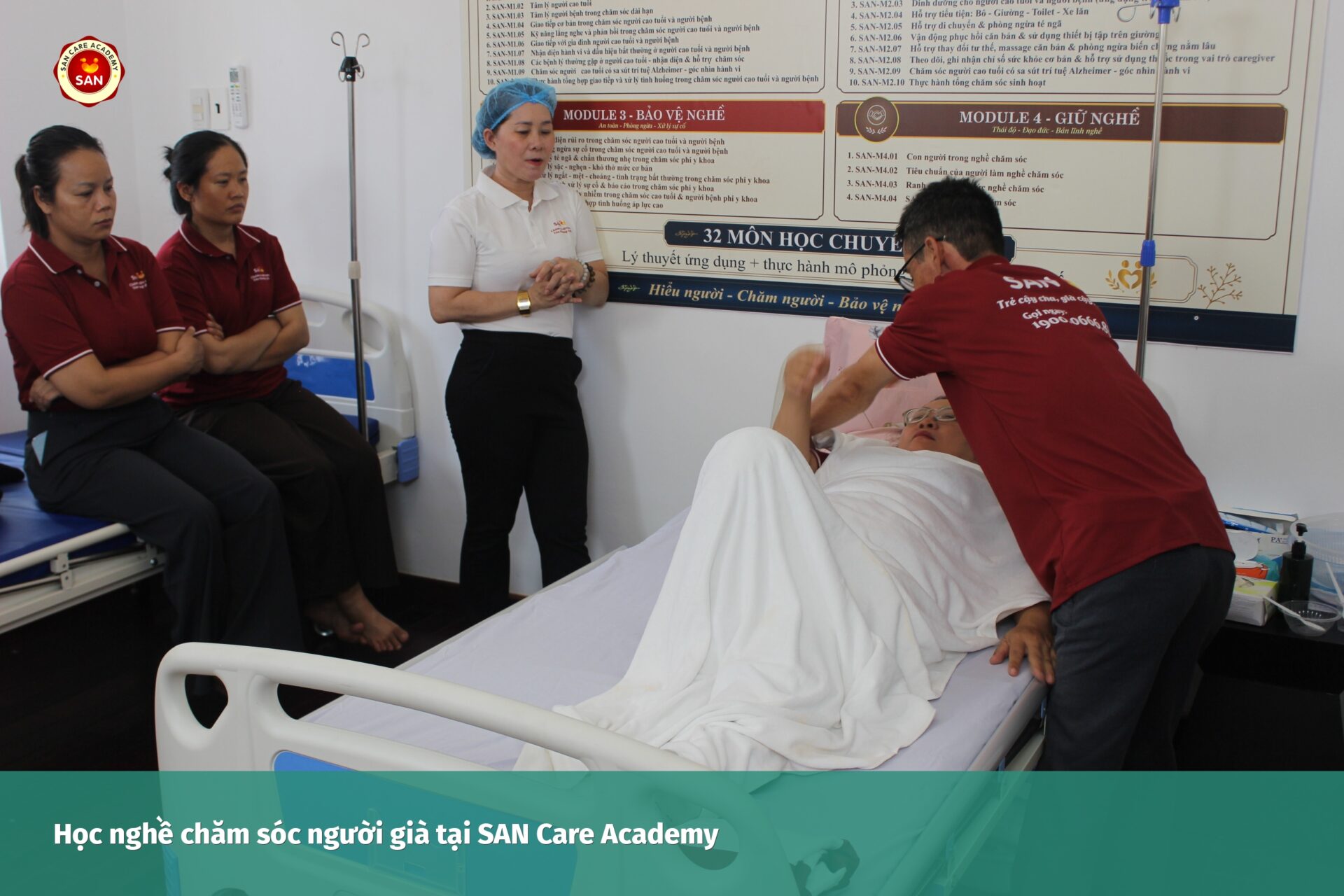
But to pursue a long-term career in elderly care, simply feeling compassion for the elderly isn't enough. Students need to understand... psychology of the elderlyThey know how to take care of their daily lives, how to avoid risks, how to communicate with their families, and how to maintain professional ethics.
SAN Care Academy build a roadmap learn a trade in elderly care This course is for beginners, those looking to change careers, those who have previously worked as caregivers or housekeepers but lack formal training, and anyone who wants to enter the caregiving profession seriously, with skills and standards.
What kind of job is caring for the elderly?
Elderly care involves assisting older adults with daily activities, including eating, hygiene, dressing, mobility, rest, conversation, monitoring their basic well-being, and maintaining their safety in everyday life.
Caring for the elderly involves more than just manual labor. It's a job that requires observation, patience, carefulness, and respect for the person being cared for.
A good caregiver is not just someone who knows how to help an elderly person stand up, change diapers, or prepare meals. They also know when the elderly person is sad, when the elderly person is scared, when the elderly person shows unusual signs, when to notify family members, and when not to take matters into their own hands.
Therefore, learning the profession of elderly care means learning everything. skills, attitude, and responsibility.
Who is suitable to learn the trade of aged care?
Elderly care profession Suitable for people with good health, patience, meticulousness, and a desire to do work that benefits others.
Those wishing to transition into the caregiving field can pursue training. Individuals who have previously worked as domestic helpers, caregivers, or nursing assistants but lack formal training can also learn to improve their skills. Middle-aged individuals seeking a job more suited to their current circumstances can also consider this option.
This career is also suitable for those who want to work in home care environments, nursing homes, senior care centers, or the SAN care services ecosystem.
It is important for learners to understand this: It's not a job to be done carelessly.Caregivers enter the private space of the family, interacting with the elderly at their most vulnerable moments, and therefore need kindness, honesty, and responsibility.
Can beginners learn this?
Maybe.
Even inexperienced beginners can learn the profession of elderly care if they receive proper guidance, practice correctly, and maintain a serious attitude towards learning.
Many trainees initially worry that they lack medical experience, don't know how to care for the sick, don't know how to assist the elderly, don't know how to change diapers, or don't know how to talk to difficult elderly people. Those worries are perfectly normal.
SAN Care Academy Develop a learning roadmap for newcomers, guiding them step by step: first, understanding the profession; then learning basic skills; practicing procedures; learning communication; understanding risk management; and gradually becoming familiar with a real caregiving environment if appropriate.
Newcomer You don't need to be good from the start.But newcomers need to have... A spirit of learning and respect for the profession..
Why is formal training necessary when learning to care for the elderly?
Without proper training, caregivers can easily rely on intuition or anecdotal experience.
Seeing an elderly person frail, one rushes to help them up. But helping them incorrectly can cause them to fall. Seeing an elderly person eating slowly, one urges them to eat faster. But eating too quickly can cause choking. Seeing an elderly person irritable, one gets annoyed in return. But behind that irritability, there may be pain, fatigue, fear, or a feeling of losing control.
Elderly care profession There are many small things, but Every small task needs to be done right..
Formal training helps caregivers know what they should and shouldn't do on their own, when to inform family members, when to seek medical help, and how to care for the elderly while preserving their dignity.
Vocational training program in aged care at SAN Care Academy
Study path at SAN Care Academy It is designed so that learners can start from the basics, gradually develop their skills, and understand the practical requirements of the profession.
Step 1: Initial consultation
Before studying, SAN Care Academy Provide counseling to understand the student's goals.
Some people study to get a job. elderly care professionSome people are studying to switch from being a domestic helper. professional care Furthermore, some people study to care for their elderly parents. Others study because they want a stable and meaningful profession.
Entrance counseling helps students choose the right course, understand the job requirements, and create a suitable learning path based on their age, experience, health, and available time.
Step 2: Understanding the profession of caring for the elderly
Students need to understand that caring for the elderly is different from regular domestic work.
Domestic help focuses on housework, cooking, and cleaning. Elderly care focuses on the individual, especially older adults who need support with daily activities, psychological well-being, and safety.
Caregivers need to be observant, communicative, supportive, report-oriented, and respectful in every small detail. This is a crucial foundation for learners to view caregiving not as a side job, but as a valuable profession.
Step 3: Learn about the psychology of the elderly.
Older adults can experience many changes in their emotions and behavior.
They may be forgetful, repetitive, easily upset, irritable, afraid of loneliness, afraid of dependence, or afraid of bothering their children or grandchildren. Some are uncooperative because of pain, embarrassment, fear of losing control, or because they don't want to be seen as weak.
Students are guided on how to understand these changes in order to be less impatient, less personalizing the words of the elderly, and to communicate with patience.
A caregiver who understands the elderly will provide gentler care and have a longer career.
Step 4: Learn daily living care skills.
Trainees learn basic caregiving skills such as assisting with eating, drinking, personal hygiene, dressing, changing diapers, assisting with mobility, arranging living space, and caring for sleep.
These skills need to be learned in a practical way. It's not just about getting the job done, but about doing it safely, cleanly, discreetly, and respectfully towards the elderly.
For example, when assisting with personal hygiene, caregivers need to maintain privacy. When assisting with eating, they need to observe swallowing ability and fatigue. When assisting with mobility, they need to be aware of the risk of falls. When changing clothes, they need to avoid causing the elderly person pain or embarrassment.
Step 5: Learn about safety in caregiving.
Safety is a very important part of the aged care profession.
Caregivers need to know how to prevent falls, choking, pressure ulcers, and basic infection control, as well as recognize abnormal signs and report them promptly.
SAN Care Academy emphasizes that caregivers should not only follow instructions but also be observant to prevent risks. A tripped-up walkway, a slippery floor, a rushed meal, or an unusually red patch of skin can all be signs that require attention.
Good care is preventative care.
Step 6: Learn communication and reporting skills.
Caregivers work with both the elderly and their families.
With the elderly, speak gently, avoid giving orders, shouting, criticizing, or making them feel useless. With family, report truthfully, clearly, and on time.
Family members need to know how the elderly person is eating, sleeping, whether their mood is stable, whether there are any unusual signs, falls, pain, coughs, fatigue, or any other changes that require attention.
A good report reassures the family and demonstrates the caregiver's professionalism.
Step 7: Learn the ethics of the caregiving profession.
Professional ethics is an indispensable part.
Caregivers may have access to family property, private information, health conditions, and very personal moments of the elderly. Therefore, caregivers need to be honest, discreet, punctual, keep their word, not use family belongings without permission, and not disclose private information.
Caregivers also need to know how to manage their emotions. When elderly people are difficult, uncooperative, or say hurtful things, caregivers should not react with frustration. It is important to understand that many behaviors stem from age, illness, or insecurity.
Kindness is fundamental, but a long-term career requires additional discipline and standards.
Supervised practice and internships
The profession of caring for the elderly cannot be learned solely through theory. Learners need practical experience to know if their actions are correct, if their communication is appropriate, and if their handling of situations is safe.
SAN Care Academy emphasizes hands-on learning. For suitable students, after the initial foundational learning phase, SAN can guide them towards supervised internships.
Supervised internships help trainees become familiar with a real caregiving environment, develop professional skills, understand family needs, and may receive some financial support during their internship.
This is a crucial stage for trainees to transition from "apprenticeship" to "apprenticeship".getting acquainted with the profession"
Where can I work after graduation?
Upon completing the training program and meeting the relevant requirements, trainees can pursue careers in a variety of caregiving environments.
Students will be able to provide care for the elderly at home. home care for the sick.Support is provided at nursing homes, senior care centers, care facilities, or within SAN's care service ecosystem if eligible.
For those learning to care for their elderly relatives, the knowledge gained from the course helps families care for their elderly parents more effectively, reducing risks and making daily life less confusing.
Does studying to become a caregiver for the elderly have a future?
The need for elderly care is increasing as more families have elderly parents, sick family members requiring home care, or children who are busy or live far away from their parents.
But the need isn't just about "having someone around." Families increasingly need caregivers who can... Skilled, ethical, communicative, risk-aware, and able to work reliably..
Therefore, apprentices in elderly care who receive proper training, possess a positive attitude, and are willing to put in practical experience will have a greater chance of long-term career development compared to those who only work based on self-taught experience.
Is it difficult to learn the trade of caring for the elderly?
This profession isn't too difficult to start, but it's not easy if you lack patience and responsibility.
The challenge lies not only in taking care of the body, but also in maintaining it. calm, kind, and careful attitude Over a long period of time, caregivers have to perform many small, repetitive tasks daily, sometimes in situations where the elderly person is uncooperative or the family has high expectations.
If students understand these difficulties beforehand, prepare properly, and receive systematic training, starting the profession will be much easier.
Why should you study at SAN Care Academy?
SAN Care Academy is built upon the practical experience of caring for the elderly and the sick at home within the SAN ecosystem. Therefore, the curriculum closely aligns with the real needs of families and caregiving practices.
Trainees are trained not only in skills, but also in discipline. professional attitude and ethicsSAN doesn't want its trainees to just "know how to do things," but rather to understand why they must do things correctly, why they must report, why they must maintain confidentiality, and why they must respect the elderly even in the smallest matters.
Studying at SAN Care Academy means learning a practical, standardized, and long-term career in caregiving.
Frequently Asked Questions about Training in Elderly Care
- Is it possible to learn elderly care without prior experience?
Yes. Beginners can still learn if they have the right health, a serious attitude, patience, and the right mindset for apprenticeship.
- Do I need a medical degree to study aged care?
A medical degree is not required to begin learning non-medical care skills. However, learners need to understand the limitations of the job and should not attempt to perform tasks outside of their medical expertise.
- Can I start working immediately after graduating?
Employment depends on skills, attitude, health, academic results, and the practical requirements of each position. For suitable students, SAN can guide them towards internships and employment.
- Is an internship available?
For suitable students, after the initial foundational learning phase, SAN can guide them towards supervised internships to familiarize them with a real caregiving environment.
- Is caring for the elderly a suitable profession for middle-aged people?
It may be suitable if the learner has good health, patience, and a serious attitude towards the job. Many families also trust caregivers who are mature, well-behaved, and responsible.
- Can men learn the trade of caring for the elderly?
Yes. Men can absolutely learn the profession of caring for the elderly, especially in cases requiring mobility assistance, shift care, or care for critically ill patients.
- Will I receive a certificate upon completion of the course?
Depending on the program, students who complete the course may receive confirmation/certification of completion. However, for long-term career success, students still need practical skills, a positive attitude, and suitability for the job.
- Is studying to care for elderly parents appropriate?
Yes. If you're not studying to get a job but to take care of your parents, SAN Care Academy We can advise on courses or content that suit your family's needs.


