
What do you need to learn to study patient care?
One of the reasons many people hesitate to pursue a career in caregiving is because they can't picture what it entails:
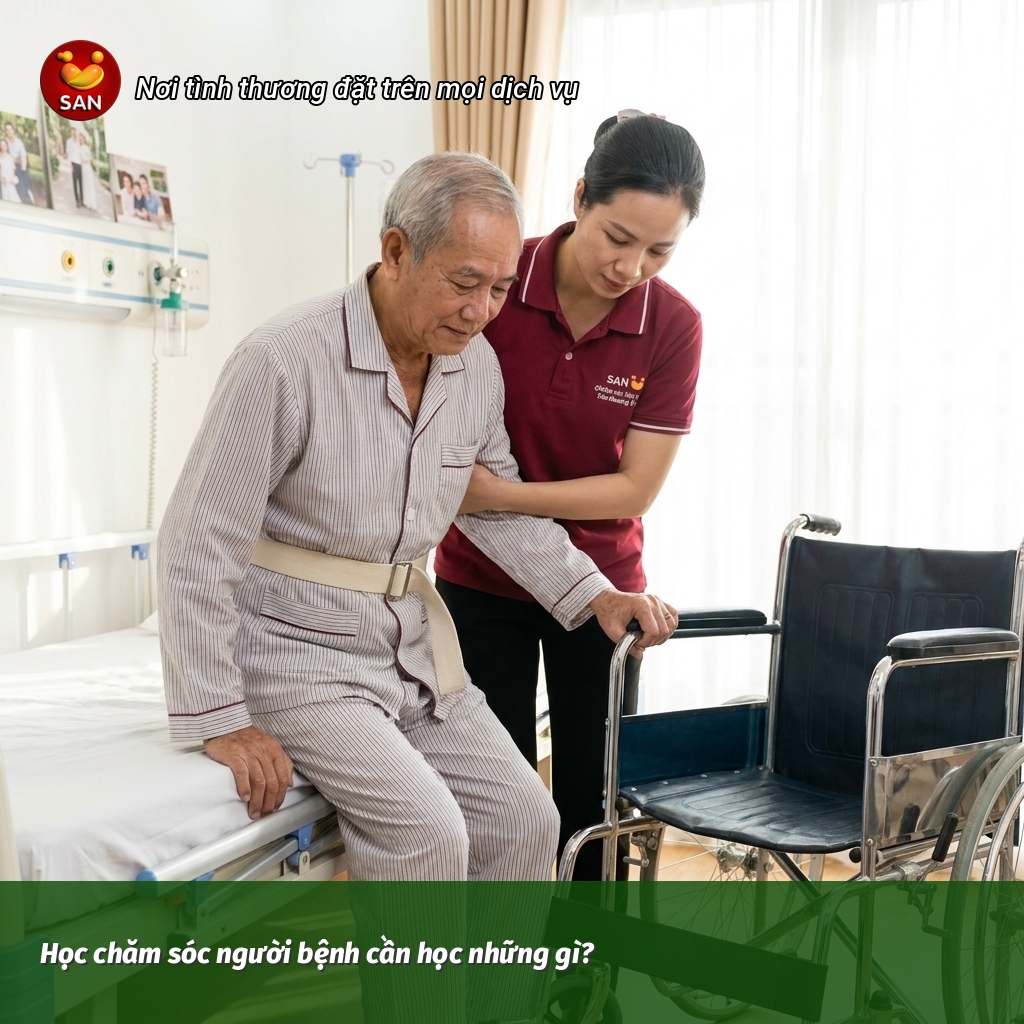
"What will I study?"
Không giống các ngành nghề quen thuộc có môn học rõ ràng, caregiving thường bị hiểu mơ hồ. Nhiều người nghĩ đơn giản là “học cách chăm”, nhưng thực tế, nội dung học bài bản hơn rất nhiều.
Without a clear structure, you can easily fall into the trap of learning too little – or learning the wrong things.
Một chương trình đào tạo caregiver đúng nghĩa thường được xây dựng xoay quanh 4 trụ cột chính.
The first pillar is basic care knowledge.
This is nền tảng của toàn bộ nghề. Bạn sẽ học về cơ thể người, cách theo dõi tình trạng sức khỏe, dấu hiệu bất thường, dinh dưỡng, vệ sinh và an toàn trong chăm sóc.
This section helps you answer the most important question: what am I taking care of?
Without this foundation, you'll easily act on impulse – like many of the "flower girl nurses" today. And as analyzed in the article... 5 mistakes to avoid when caring for a sick person at home.A lack of knowledge can lead to serious mistakes.
The second pillar is practical skills.
This is the part where knowledge is put into action.
You will learn how to properly support patients, assist with feeding, change dressings, provide personal hygiene, assist with mobility, and handle common situations.
These skills cannot be learned through reading or watching. They need to be practiced, refined, and repeated many times.
This is also why those who learn through a "do-it-yourself" approach often take a much longer time to reach the same level.
The third pillar is psychology and communication.
This is a part that many people overlook, but it determines the quality of care.
Người bệnh không chỉ cần được chăm về thể chất, mà còn cần được hỗ trợ về tinh thần. Họ có thể buồn, lo lắng, hoặc mất động lực. Một caregiver tốt cần biết cách giao tiếp, lắng nghe và tạo cảm giác an toàn.
If you have read the article The more careful you are with the patient, the worse the illness becomes.You will find that the wrong approach to psychology can directly affect the recovery process.
The fourth pillar is professional ethics.
This is the less "tangible" part, but it is very important.
Caring for the sick This profession involves direct interaction with people, trust, and sensitive situations. Those who work in this field need honesty, responsibility, and respect.
Without this part, good skills alone are not enough for long-term career success.
These four pillars form a complete system.
But learning the theory alone is not enough.
The deciding factor remains practice.
In SAN Care Academy, chương trình không dừng ở việc dạy kiến thức. Học viên được tham gia 100 giờ thực tập có lương, nơi họ trực tiếp làm việc trong môi trường thực tế.
This helps them avoid being "shocked" when they start working.
They were already familiar with the work before officially taking on the shift.
Another question that many people ask is:
"I have no prior experience, can I still learn?"
The answer is yes.
This program is designed for beginners starting from scratch. You don't need any prior knowledge. What matters is your willingness to learn and work.
If you have read the article How long does it take to study elderly care before I can start working?You'll find that the learning time isn't too long – but the effectiveness depends heavily on how you learn.
Another important factor is the output.
Why study?
If you have to find a job on your own after graduation, the risks remain. But if you study within a system where there is already demand, the story is different.
In SAN care platform tại nhà, học viên sau khi hoàn thành có thể tham gia vào hệ sinh thái dịch vụ. Điều này giúp bạn không phải bắt đầu lại từ đầu.
You can start working almost immediately.
Returning to the original question: what do you need to learn to study patient care?
The answer isn't a long list, but rather a system of four pillars: knowledge, skills, mindset, and ethics.
If you possess all four qualities, you can not only get the job done, but you can do it well and develop in the long term.
If you are considering vocational training, choose a program that is well-structured, includes hands-on practice, and has job placements.
That's the fastest way to go from "knowing nothing" to "being able to do the job".
Liên hệ SAN để được tư vấn dịch vụ chăm sóc tại nhà, hoặc đăng ký tìm hiểu chương trình đào tạo caregiver in SAN Care Academy.
SAN care platform


