
Taking care of the sick is not something everyone can do.
When a family member becomes seriously ill or elderly, many people's first reaction is: "Let me take care of them."
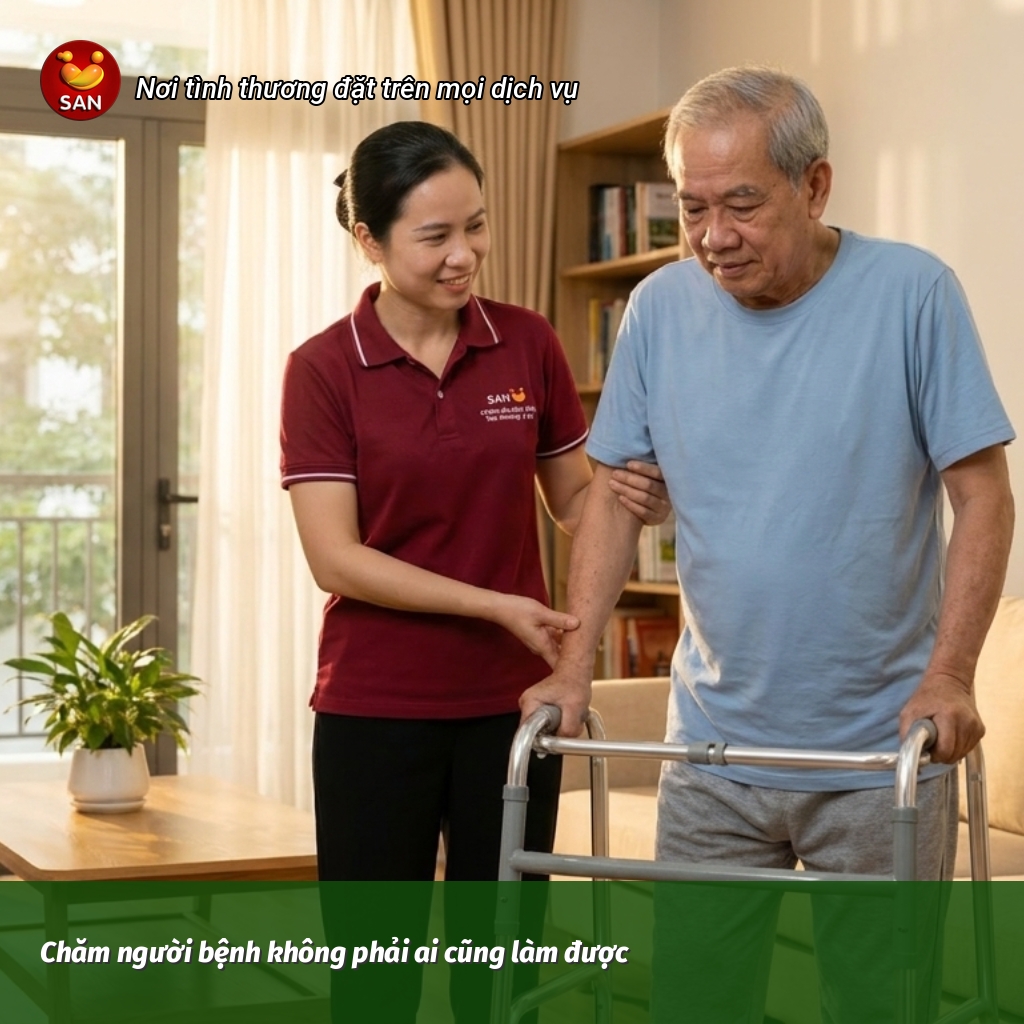
It's a very natural reaction. It stems from affection, responsibility, and the desire to be with loved ones during their most difficult times. But it is precisely from this thought that a common misunderstanding begins to form: caring for the sick It's something anyone can do.
That's not true.
Caring for the sick is not just about "being there," but a process that requires far more skills than we realize. And if we don't realize this early on, the impact will not only be on the patient, but also on the caregiver.
Let's take a look at a typical day in caregiving.
A stroke patient needs proper mobility support to prevent muscle stiffness and aid in rehabilitation. A person who has undergone surgery needs support. monitor for signs of infectionChange dressings according to proper procedures. An elderly person who is bedridden for a long time needs to be turned regularly to prevent pressure ulcers. A person with respiratory problems needs to have their breathing monitored and respond promptly to any abnormal signs.
These things cannot be done based on "feelings".
These procedures require basic medical knowledge, practical skills, and keen observation. More importantly, caregivers need to know when a situation is beyond their capabilities so they can promptly notify medical personnel.
This is the major difference between a trained caregiver and one who relies on experience.
Currently, many families still opt for the familiar solution: relying on acquaintances, relatives, or hiring "untrained caregivers"—people who provide care without formal training. They may be very dedicated, but they lack the necessary foundation to handle complex situations.
And it's worth noting that errors in care don't usually happen immediately, but accumulate gradually over time.
Incorrect sleeping posture can lead to bedsores. An inappropriate diet can worsen the condition. A small, overlooked sign can become a major complication. By the time it's recognized, it may be too late.
Not only are patients affected, but caregivers also face immense pressure.
Caring for the sick It's a 24/7 job. There are no clear breaks, no boundaries between work and life. Without time management skills, emotional control, and maintaining good health, caregivers can easily become burned out.
This is why many people are initially very determined, but after a while they can't continue.
So what makes a true caregiver?
First and foremost is knowledge. You don't need to be a doctor, but you need to understand the basic principles of care: nutrition, exercise, hygiene, and monitoring for abnormal signs.
Secondly, there are practical skills. This includes things like properly supporting patients, changing bandages, assisting with feeding, and handling common situations.
Thirdly, there's the psychological aspect. Patients, especially... elderlyThey often experience many emotional changes. They may become irritable, sad, or lose confidence. Caregivers need sufficient patience and understanding to support them, not just "do the job."
And finally, there's professional ethics. This is the factor that makes the long-term difference. Honesty, responsibility, and respect for patients cannot be learned in a day, but must be built and maintained.
All of this cannot be achieved through spontaneous experience alone. It requires systematic, formal training and practical application.
That's also why professional caregiver training programs are becoming more important than ever. They not only equip learners with skills but also help them understand the profession correctly, prepare them mentally, and provide a clear career development path.
In SAN care platform, each caregiver Before starting work, everyone must undergo training and evaluation. At the same time, SAN Care Academy It was established to standardize human resources, ensuring that caregivers not only have the heart but also the competence.
This not only helps improve service quality, but also protects everyone. patients and protect their families from unnecessary risks.
If you think "caring is easy," perhaps it's time to reconsider.
And if you're considering stepping in... caregivingThis is not an easy path, but it is a clear, meaningful one, and it desperately needs people.
Contact SAN for advice on home care services, or to learn about our training programs. professional nurse in SAN Care Academy.
SAN care platform


