
Book a Caregiver in Vietnam Before You Fly: A Guide for Overseas Vietnamese Families
If you are returning to Vietnam for a medical appointment or helping a family member prepare for a trip, you do not necessarily have to wait until arrival to arrange caregiving support.
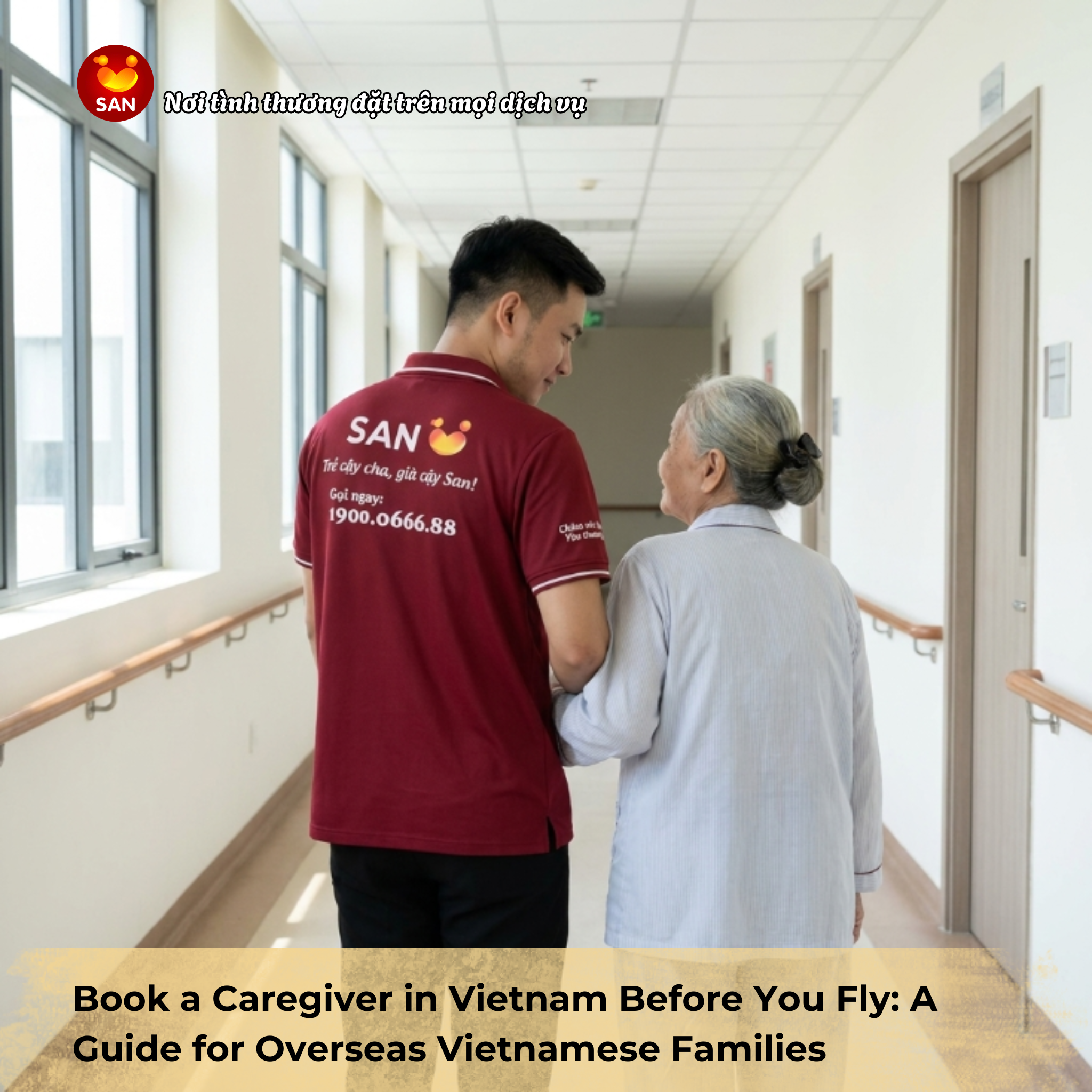
Once the basic travel and medical schedule is known, families can begin preparing practical care in advance.
This can be especially useful when the patient is:
- elderly;
- travelling alone;
- recovering from illness;
- expected to stay in hospital;
- likely to need help after treatment;
- or returning without relatives who can remain with them throughout the trip.
1. What should you know before contacting a caregiver service?
You do not need to have every detail finalized.
However, having the following information can make the discussion much more efficient:
- patient’s age;
- expected arrival date;
- address in Vietnam;
- hospital or clinic, if known;
- appointment date;
- mobility level;
- expected type of assistance;
- approximate hours needed;
- primary family contact.
If the patient has medical instructions relevant to daily support, families should keep those documents available.
2. Think about the journey, not just one appointment
Care requirements can change during a medical trip.
For example:
- Arrival
The patient may simply need assistance settling into the accommodation. - Hospital day
They may need someone to accompany them. - Hospital admission
They may require practical bedside support during certain hours. - After discharge
The care need may move from hospital to home. - Follow-up
A companion may be needed again for another appointment.
Rather than searching for a new solution at every stage, families can discuss the expected journey from the beginning.
3. Decide what type of support is actually needed
Not everyone needs full-day care.
Some patients only need someone:
- for a hospital appointment;
- for several hours after treatment;
- during the daytime;
- overnight;
- during the first few days after discharge.
The service should match the patient’s actual level of independence.
SAN’s main English patient-care page explains its home and hospital care scope in more detail.
4. If the patient is elderly, share that information clearly
An elderly traveller may need a different pace from a younger patient.
Families should mention if the person:
- walks slowly;
- uses a mobility aid;
- becomes tired easily;
- needs assistance with personal care;
- is uncomfortable travelling alone.
For more detailed planning: planning medical care in Vietnam for an elderly overseas Vietnamese patient
5. Agree on communication before the service begins
For families living overseas, communication is part of the care arrangement.
Before the first shift, determine:
- who receives updates;
- which communication channel to use;
- how often updates are expected;
- which situations require immediate family contact;
- whether there is another relative in Vietnam who should also be contacted.
This becomes particularly important when the person arranging the service is in the United States, Canada, Australia or Europe.
6. Understand the boundary between caregiving and medical care
A caregiver supports practical daily needs.
Medical treatment remains with healthcare professionals.
Cô SAN may support activities such as:
- eating and drinking;
- personal hygiene;
- mobility;
- companionship;
- hospital accompaniment;
- practical home support;
- reminders based on instructions already provided;
- family updates.
Cô SAN does not independently diagnose illnesses, change prescriptions or make medical treatment decisions.
7. What happens if the patient’s plan changes?
Medical journeys are not always predictable.
An appointment may be moved.
The patient may need another test.
A short visit may become an admission.
A patient expected to return overseas may need several more days of recovery.
For that reason, families should provide SAN with updated information as soon as the plan changes so the care arrangement can be reviewed.
8. What should you prepare for the first day?
Before the service starts, have ready:
- exact address;
- patient’s contact number if appropriate;
- family contact;
- hospital details;
- relevant daily instructions;
- expected service time;
- basic information about mobility and daily activities.
Clear information at the beginning reduces unnecessary confusion later.
9. Book before arrival when your schedule is already known
SAN’s current website confirms that overseas families can arrange support through the SAN app or hotline before the patient travels, using information such as the service date, address and expected care needs.
Arrange care before you fly
If your travel date or hospital appointment is already confirmed, you can start planning the practical care side of the journey now.
📲 Download the SAN app to request a Cô SAN caregiver.
📞 SAN Hotline: 1900.066.688
SAN – Where compassion is at the heart of every service.
SAN nền tảng chăm sóc


